

What is the real cost of a provider sitting idle for 90 to 120 days without billing, and how much revenue is your practice losing each day due to credentialing delays? Credentialing delays are a measurable source of financial loss for medical practices in 2026. Many provider groups and hospitals report revenue losses exceeding $1 million annually due to slow credentialing and enrollment processes. More than half of healthcare leaders surveyed say credentialing bottlenecks directly delay payments and reduce cash flow.
The timeline for credentialing still averages 90–120 days for many organizations, meaning providers may sit idle and unable to bill for weeks. In some analyses, a single physician can lose over $122,000 in revenue during a 120-day delay.
These delays increase Days in AR (Accounts Receivable) and reduce practice liquidity. Faster credentialing and reduced lag time improve financial outcomes and allow providers to bill sooner. This blog explains the financial impact of credentialing delays, the ROI of improved processes, and why tracking credentialing performance matters for medical practices.
Credentialing ROI for Medical Practices
Credentialing ROI for Medical Practices focuses on how credentialing speed and accuracy affect revenue generation. Delays in enrollment directly increase Days in AR and slow down cash inflow. This section explains how credentialing decisions influence financial performance and operational efficiency.
What is Credentialing ROI?
Credentialing ROI measures the financial return generated from efficient provider enrollment and payer participation. It evaluates how quickly a provider becomes active, billable, and able to generate claims. Faster credentialing improves revenue flow. Delays increase cost and reduce collections. This metric is critical for healthcare providers, practice managers, and revenue cycle teams because it directly connects administrative timelines with financial outcomes.
Credentialing ROI can be assessed by comparing revenue gained against the cost of the credentialing process.
- Faster onboarding reduces lost revenue per provider day
- Lower credentialing lag time improves Days in AR
- Automation reduces administrative costs compared to manual processes
- Delayed enrollment leads to missed billing cycles and lost claims
- Tracking ROI helps evaluate internal vs outsourced credentialing performance
Why Credentialing Impacts Revenue
Credentialing determines when a provider can begin submitting claims. Without payer approval, services delivered cannot be billed. This creates a delay between patient care and reimbursement. The longer the credentialing lag time, the greater the financial loss. This is a direct concern for healthcare providers, billing teams, and practice administrators.
The financial impact of credentialing delays includes:
- Loss of revenue per provider day
- Increase in Days in AR (Accounts Receivable)
- Delayed cash inflow affecting operational costs
- Higher risk of claim denials due to incomplete enrollment
- Reduced productivity of newly hired providers
Credentialing Lag Time and Its Financial Impact
Credentialing lag time is the period between provider application submission and payer approval. During this time, providers cannot submit claims or receive reimbursement. This directly affects revenue generation and increases financial pressure on medical practices.
Delays in credentialing affect both cash flow and operational efficiency. For practice managers, billing teams, and healthcare providers, this creates gaps in revenue cycles.
Cost of Provider Enrollment Delays
Provider enrollment delays create measurable financial losses. Every day a provider is not credentialed leads to lost revenue per provider day. This is a direct cost that accumulates quickly across multiple providers and specialties.
Key financial impacts include:
- Lost revenue per provider day due to billing restrictions
- Increase in Days in AR as claims are submitted later
- Delayed reimbursement from payers
- Higher administrative workload for follow-ups and resubmissions
- Increased operational cost for billing and enrollment teams
For example, if a provider generates $1,500–$2,500 daily, even a 60-day delay results in significant lost revenue. This loss multiplies across large groups or hospital systems.
Impact on Days in AR and Revenue Cycle Performance
Credentialing lag time directly increases Days in AR. When claims are submitted late, the entire revenue cycle shifts forward. This reduces cash flow efficiency and slows down collections.
Effects on the revenue cycle include:
- Longer AR cycles due to delayed claim submission
- Increased aged receivables in the 60+ and 90+ categories
- Reduced the collection efficiency ratio
- Cash flow instability is affecting payroll and operations
- Higher dependency on collections and follow-up teams
Delayed credentialing creates a ripple effect across the entire revenue cycle. Billing teams spend more time managing older claims instead of processing new ones. This reduces overall productivity and increases cost per claim.
Financial Risk from Extended Credentialing Delays
Extended credentialing delays increase financial risk for medical practices. The longer a provider remains non-participating with payers, the higher the revenue gap. This impacts budgeting, forecasting, and financial planning.
Key risks include:
- Revenue leakage from unbilled services
- Higher bad debt due to delayed collections
- Increased write-offs from uncollected claims
- Reduced return on hiring new providers
- Slower practice growth and expansion
From a financial strategy perspective, credentialing is a critical control point. Delays affect revenue predictability and limit the ability to scale operations. Practices that monitor credentialing lag time can better control cost and improve overall revenue cycle performance through physician credentialing services.
Enrollment Automation vs Manual Cost
Manual credentialing relies on human effort to complete forms, track applications, and follow up with payers. This approach increases error rates and extends processing time. It also creates delays that directly affect revenue generation.
Enrollment automation reduces credentialing lag time and improves financial control. Manual processes increase administrative workload and delay provider activation. This section compares both approaches using cost, efficiency, and impact on Days in AR and revenue.
Key limitations of manual credentialing:
- Higher risk of data entry errors and incomplete applications
- Increased credentialing lag time
- Slower payer follow-up and response tracking
- Higher administrative labor cost
- Increased Days in AR due to delayed billing
Cost Impact of Enrollment Delays and Lost Revenue
Enrollment delays directly increase the cost of provider enrollment delays. Every additional day before a provider is credentialed results in lost revenue per provider day. This loss compounds over time affecting financial stability.
Financial impact includes:
- Lost daily revenue until payer approval is complete
- Delayed claim submission and payment cycles
- Increased Days in AR due to late billing
- Higher write-offs from delayed or denied claims
- Reduced return on provider hiring and onboarding
Automation Benefits on Revenue Cycle Performance
Automation improves consistency and reduces credentialing lag time. It replaces manual tracking with structured workflows and real-time updates. This improves visibility and reduces delays in payer enrollment.
Key advantages of automation:
- Faster application processing and submission
- Reduced errors through standardized workflows
- Improved tracking of payer responses
- Lower administrative costs compared to manual processes
- Faster provider activation and billing start
How Days in AR Are Affected by Credentialing
Days in AR reflect how long it takes to collect payments after services are rendered. Credentialing directly impacts this timeline. If a provider is not credentialed, claims cannot be submitted. This delays the entire revenue cycle and increases the average AR days.
Impact of Credentialing Lag Time on AR Days
Credentialing lag time delays claim submission. Claims cannot enter the billing cycle until the provider is enrolled with payers. This shifts the start of the revenue cycle forward and increases Days in AR.
Key effects include:
- Delayed claim submission leads to extended AR cycles
- Increase in aged receivables (60+ and 90+ days)
- Slower reimbursement from insurance payers
- Reduced collection efficiency
- Higher dependency on follow-up and collections teams

Link Between Credentialing and Revenue Cycle Delays
Credentialing is the starting point of the revenue cycle. Delays at this stage affect all downstream processes, including billing, coding, and collections. This creates inefficiencies across the entire system.
Revenue cycle impacts include:
- Delayed claim submission affects billing timelines
- Increased claim backlog in billing systems
- Higher risk of denied or rejected claims
- Reduced cash flow consistency
- Increased administrative workload for billing teams
Strategies to Improve Credentialing ROI
Improving credentialing ROI requires reducing delays, controlling costs, and increasing revenue capture speed. The goal is to shorten credentialing lag time and reduce lost revenue per provider day. These strategies focus on improving efficiency across credentialing, billing, and compliance workflows.
Key Strategies to Improve Credentialing ROI
Credentialing performance improves when workflows are structured and tracked. Manual inefficiencies must be identified and reduced. Data visibility and process control are essential.
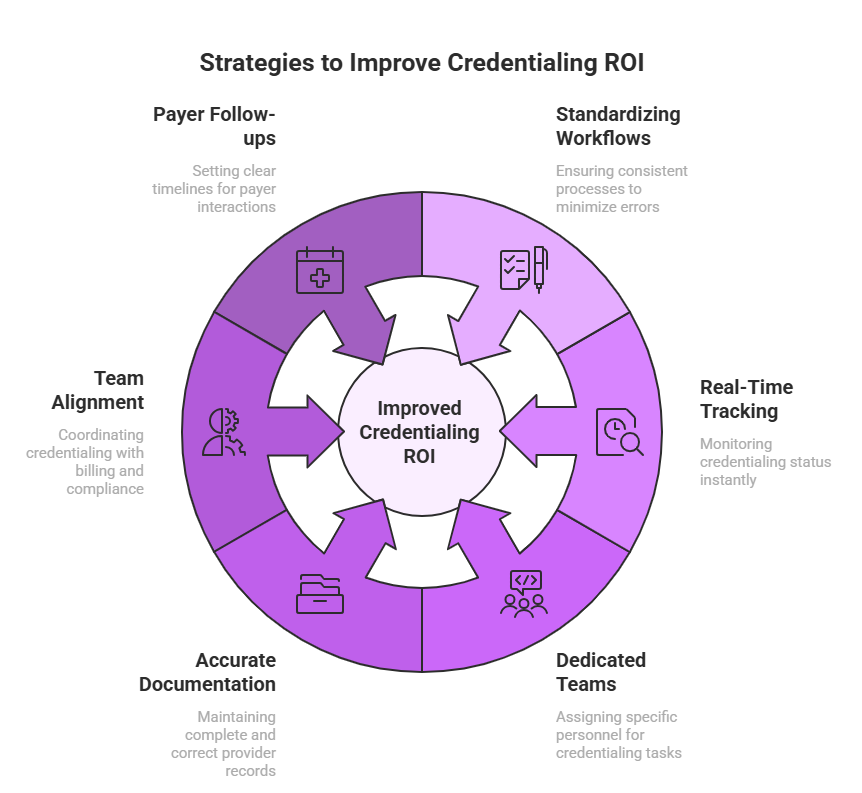
Core strategies include:
- Standardizing credentialing workflows to reduce errors
- Tracking credentialing status in real time
- Assigning dedicated credentialing and enrollment teams
- Maintaining accurate and complete provider documentation
- Aligning credentialing with billing and compliance teams
- Setting clear timelines for payer follow-ups
Conclusion
Credentialing delays directly affect revenue, Days in AR, and overall cash flow. Reducing credentialing lag time and controlling the cost of provider enrollment delays improves billing timelines and financial stability.
Medical practices that track credentialing performance and adopt efficient processes often rely on provider enrollment and credentialing services to see faster provider activation and better revenue outcomes.. A focused approach to credentialing ROI supports consistent growth and stronger revenue cycle performance.
FAQs
What is credentialing ROI for medical practices?
Credentialing ROI measures the financial return from timely provider enrollment and payer participation. It shows how quickly providers become billable and generate revenue.
How does credentialing lag time affect revenue?
Credentialing lag time delays claim submission and billing. This leads to lost revenue per provider day and increases Days in AR.
What is the cost of provider enrollment delays?
Enrollment delays result in daily revenue loss, delayed reimbursements, and higher administrative costs. These delays also increase financial pressure on practices.
How does credentialing impact Days in AR?
Delayed credentialing prevents timely claim submission. This extends the revenue cycle and increases the number of days payments remain outstanding.
How can practices improve credentialing ROI?
Practices can improve ROI by reducing delays, tracking enrollment status, and using structured workflows. Faster credentialing leads to quicker billing and better cash flow.