Provider credentialing is one of the most critical processes in healthcare administration. It ensures that physicians, specialists, therapists, and other healthcare professionals meet licensing, education, and compliance standards required by insurance companies and healthcare organizations.
But what happens when a provider’s medical license expires during credentialing?
The consequences can be far more serious than many practices realize. From payer enrollment delays and claim denials to revenue disruption and compliance risks, an expired provider license can impact every part of the revenue cycle.
For healthcare practices, hospitals, and medical groups, understanding these risks is essential to maintaining uninterrupted operations and reimbursement.
In this guide, the experts at Dr Credentialing explain exactly what happens when provider licenses expire during credentialing, how it affects billing and payer enrollment, and what healthcare organizations can do to prevent costly disruptions.
Why Provider Licenses Matter in Credentialing
Credentialing is the process insurance companies and healthcare organizations use to verify a provider’s qualifications before allowing them to participate in payer networks.
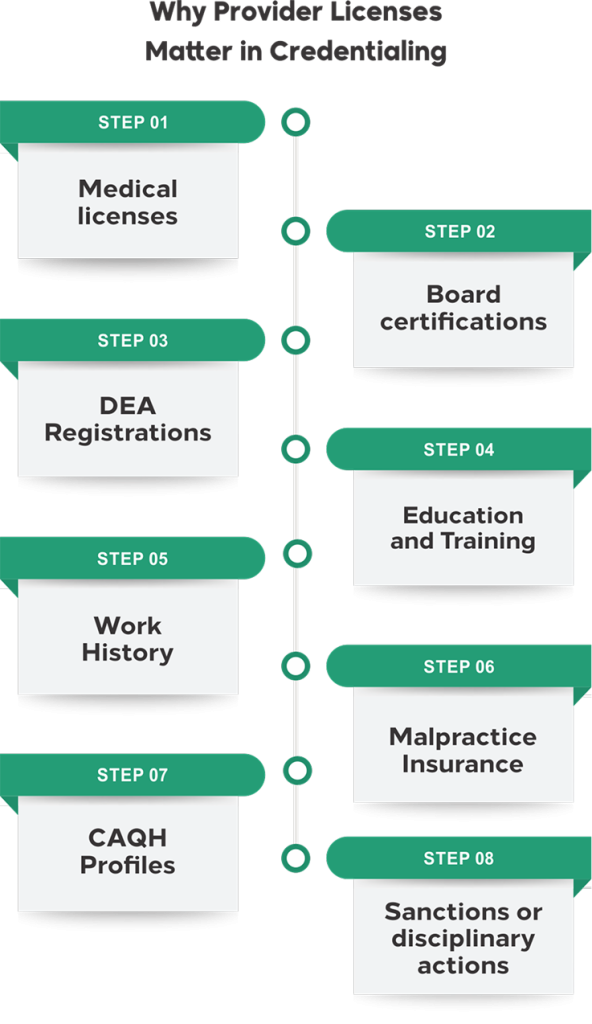
During this process, payers review:
- Medical licenses
- Board certifications
- DEA registrations
- Education and training
- Work history
- Malpractice insurance
- CAQH profiles
- Sanctions or disciplinary actions
Among these requirements, an active medical license is one of the most important verification points.
Without a valid license, providers typically cannot:
- Complete insurance credentialing
- Enroll with Medicare or Medicaid
- Maintain hospital privileges
- Submit reimbursable claims
- Participate in payer networks legally
Even a short lapse in licensure can trigger delays and administrative complications that affect both compliance and revenue generation.
What Happens When a Provider License Expires During Credentialing?
When a provider’s license expires during credentialing, the credentialing process often stops immediately until the license is renewed and verified.
The exact impact depends on:
- The insurance payer
- State regulations
- How long the license remains inactive
- Whether the provider was already partially approved
However, several common problems usually occur.
1. Credentialing Applications Are Put on Hold
Most insurance payers will suspend or pause the credentialing application once they discover an expired license.
This means:
- Verification timelines restart
- Enrollment reviews are delayed
- Additional documentation may be required
- The provider cannot move forward in the approval process
For practices onboarding new providers, this can delay patient scheduling and reduce expected revenue.
2. Insurance Claims May Be Denied
An expired provider license can directly affect medical billing and reimbursement.
Many insurance companies reject claims submitted under:
- An inactive provider license
- Expired credentials
- Incomplete payer enrollment records
Even if services were legitimately provided, claims may still be denied because the provider was not considered fully credentialed or compliant at the time of service.
This can lead to:
- Increased accounts receivable (AR)
- Revenue delays
- Rework for billing teams
- Higher administrative costs
3. Medicare and Medicaid Enrollment Issues
Government payers maintain strict credentialing and compliance standards.
If a provider’s medical license expires:
- Medicare enrollment may be suspended
- Medicaid participation can be interrupted
- Revalidation processes may fail
- Existing enrollments may become inactive
In some cases, providers may need to:
- Resubmit documentation
- Complete recredentialing
- Undergo additional verification reviews
These delays can significantly impact reimbursement timelines for healthcare organizations that depend heavily on government payer revenue.
Can Providers Continue Billing Insurance With an Expired License?
In most situations, providers cannot legally or contractually continue billing insurance companies with an expired medical license.
This creates serious risks for healthcare organizations.
Potential consequences include:
- Claim denials
- Recoupments from payers
- Compliance audits
- Contract violations
- Legal exposure
- Delayed reimbursements
Some payers may retroactively deny payments if they discover the provider’s license was inactive during the dates of service.
This is why proactive license monitoring is essential in provider credentialing and revenue cycle management.
How Expired Licenses Affect Revenue Cycle Management
One of the biggest content gaps among credentialing articles is the lack of discussion around financial impact.
In reality, expired provider licenses can create major revenue cycle disruptions.
Delayed Cash Flow
If providers cannot complete credentialing, practices may experience:
- Delayed patient appointments
- Reduced payer reimbursements
- Increased claim backlog
- Longer payment cycles
For smaller practices, even a few weeks of interrupted billing can create operational strain.
Increased Administrative Burden
Billing and credentialing teams often spend significant time:
- Correcting denied claims
- Contacting payers
- Resubmitting enrollment documents
- Updating CAQH profiles
- Tracking reinstatement timelines
These administrative costs reduce efficiency across the organization.
Risk of Lost Contracts
Some insurance payers may terminate or suspend provider participation if credentialing requirements are not maintained.
This can impact:
- Network participation
- Referral relationships
- Patient retention
- Practice reputation
Losing payer contracts can take months to recover from, especially if recredentialing becomes necessary.
How CAQH Profiles Are Affected
CAQH plays a major role in provider credentialing.
When licenses expire:
- CAQH profiles may become outdated
- Credentialing attestations can fail
- Payers may flag provider records
- Verification requests may be delayed
Since many insurance companies rely heavily on CAQH data, maintaining accurate provider information is critical for avoiding credentialing interruptions.
Real-World Example of Credentialing Delays
Imagine a physician joins a multi-specialty clinic and begins the credentialing process with several commercial payers.
During the enrollment review:
- The physician’s state license expires unexpectedly
- The payer pauses the application
- Claims submitted under the provider begin rejecting
- The clinic cannot fully schedule insured patients under that physician
As a result:
- Revenue decreases
- Administrative workload increases
- Credentialing timelines extend by several weeks
Situations like this are more common than many healthcare organizations realize.
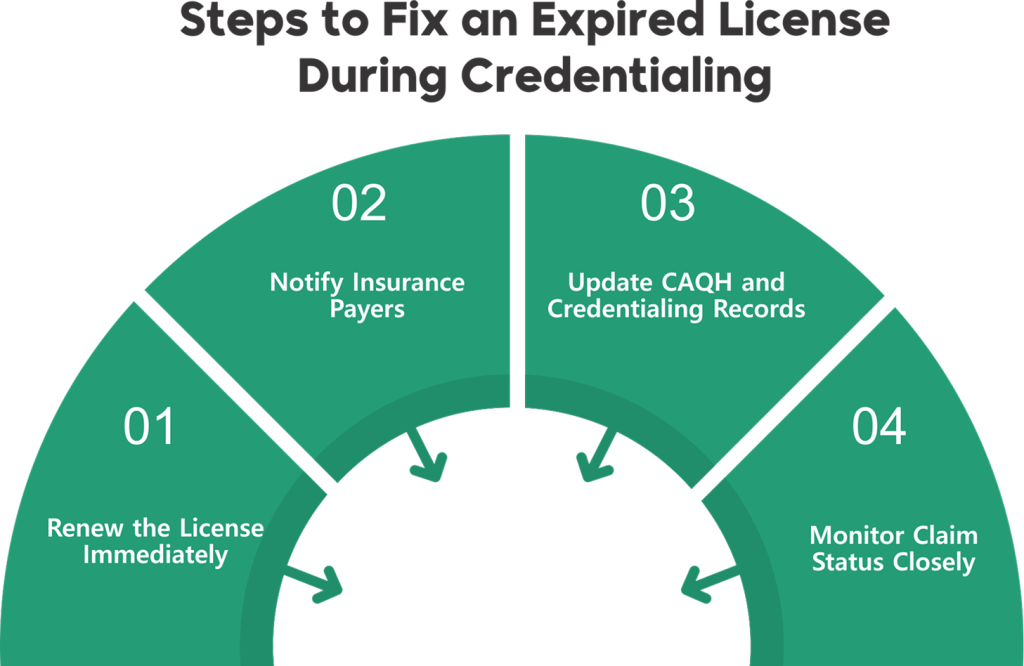
Steps to Fix an Expired License During Credentialing
If a provider license expires during credentialing, immediate action is necessary.
Step 1: Renew the License Immediately
The provider should:
- Complete renewal requirements
- Pay renewal fees
- Submit continuing education documentation if required
The faster the renewal occurs, the lower the operational disruption.
Step 2: Notify Insurance Payers
Credentialing teams should inform affected payers immediately.
This demonstrates:
- Transparency
- Compliance awareness
- Active corrective action
Some payers may allow credentialing reviews to resume quickly once updated documentation is provided.
Step 3: Update CAQH and Credentialing Records
Once the license becomes active again:
- Update CAQH profiles
- Upload renewal documentation
- Reattest provider information
- Verify all payer portals reflect updated status
Incomplete updates can create additional delays.
Step 4: Monitor Claim Status Closely
Billing teams should:
- Identify affected claims
- Track denials
- Appeal eligible claims
- Confirm payer reinstatement dates
This helps reduce revenue leakage during the recovery period.
How to Prevent License Expiration Issues
Prevention is far easier than recovery.
Healthcare organizations should implement proactive credentialing management systems that include:
Automated License Tracking
Monitor:
- Expiration dates
- Renewal windows
- Continuing education deadlines
- DEA registrations
Automated reminders reduce the risk of oversight.
Regular Credentialing Audits
Quarterly reviews help identify:
- Missing documentation
- Incomplete payer records
- Expiring certifications
- CAQH inconsistencies
Routine audits strengthen compliance and reduce payer issues.
Dedicated Credentialing Support
Many practices struggle to manage credentialing internally while handling patient care and billing operations.
Working with experienced credentialing professionals helps practices:
- Maintain compliance
- Avoid enrollment delays
- Reduce claim denials
- Improve payer communication
Why Outsourcing Credentialing Helps Reduce Risk
Credentialing is complex, time-sensitive, and heavily regulated.
Outsourcing credentialing services can help healthcare organizations:
- Track provider licenses proactively
- Maintain payer enrollment accuracy
- Handle CAQH management
- Reduce administrative workload
- Prevent costly credentialing delays
At Dr Credentialing, healthcare organizations receive support for:
- Provider credentialing
- Insurance enrollment
- CAQH maintenance
- Recredentialing
- Compliance monitoring
- Medical billing coordination
This proactive approach helps providers stay compliant while protecting revenue continuity.
Final Thoughts
An expired provider license during credentialing can create serious operational, financial, and compliance challenges for healthcare organizations.
From delayed payer enrollment and claim denials to revenue disruption and compliance risks, even a temporary lapse can affect the entire revenue cycle.
The good news is that these issues are largely preventable with:
- proactive monitoring,
- organized credentialing workflows,
- accurate CAQH management,
- and experienced credentialing support.
Healthcare providers who prioritize credentialing compliance reduce administrative stress, protect reimbursement, and maintain smoother payer relationships.
For practices seeking reliable credentialing and enrollment support, Dr Credentialing helps healthcare organizations streamline provider credentialing while minimizing compliance risks and billing interruptions.