
If your insurance credentialing application has been stuck in review for months, you’re not alone. Many healthcare providers become concerned when approvals take longer than expected, especially when delayed credentialing means delayed reimbursements and lost revenue opportunities.
The good news is that lengthy credentialing timelines are often a normal part of the process. Depending on the insurance payer, provider specialty, application accuracy, and verification requirements, credentialing can take anywhere from 60 to 180 days, or even longer in certain situations.
However, not every delay is harmless. Understanding what causes credentialing bottlenecks, how long different payers typically take, and when a delay should raise concerns can help you set realistic expectations and take proactive steps to keep your application moving forward.
Is It Normal for Insurance Credentialing to Take Months?
In most cases, yes. Insurance credentialing is not a simple approval process that happens in a few days. Before a provider can join an insurance network, payers must verify licenses, education, certifications, work history, malpractice coverage, and other professional credentials. Each verification step requires coordination between multiple organizations, which naturally extends processing times.
For most healthcare providers, credentialing takes between 60 and 180 days. Medicare and some Medicaid plans may process applications faster, while commercial insurance companies often require several months due to additional reviews and network assessments.
The key takeaway is that a credentialing timeline of two to six months is generally considered normal. However, the reasons behind the delay matter, and understanding the process can help determine whether your application is progressing as expected.
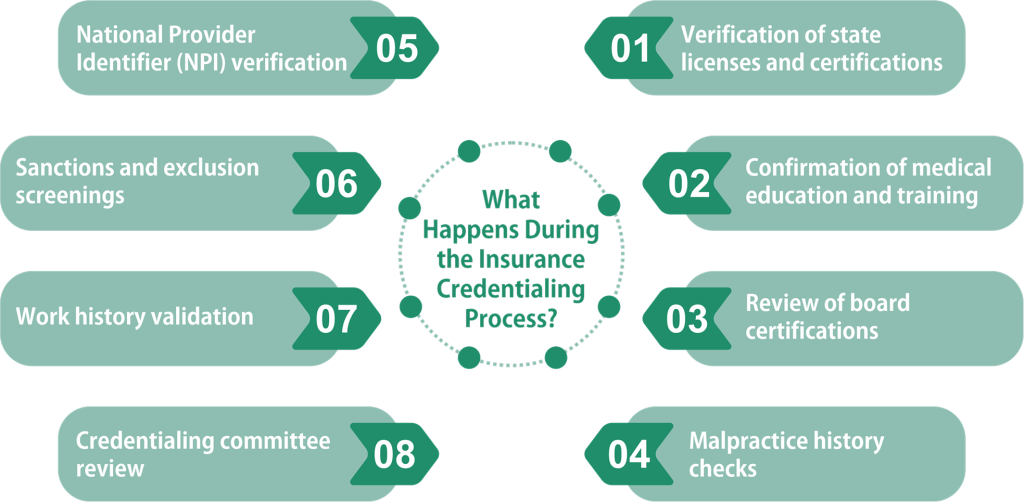
What Happens During the Insurance Credentialing Process?
Many providers are surprised by how much happens behind the scenes after submitting an application. Insurance companies don’t simply review a form and issue approval. Instead, they conduct a comprehensive evaluation to confirm that a provider meets their participation standards.
The process typically includes:
- Verification of state licenses and certifications
- Confirmation of medical education and training
- Review of board certifications
- Malpractice history checks
- National Provider Identifier (NPI) verification
- Sanctions and exclusion screenings
- Work history validation
- Credentialing committee review
Once credentialing is completed, providers may still need to go through contracting and enrollment before they can begin billing the payer. This is one of the biggest reasons providers feel their credentialing is taking longer than expected.
Why Does Insurance Credentialing Take So Long?
Several factors contribute to lengthy credentialing timelines, and not all of them are within a provider’s control.
Insurance companies must verify information from multiple primary sources, including state licensing boards, educational institutions, hospitals, and certification organizations. Even a small delay from one source can slow down the entire application.
In addition, many payers still rely on manual review processes. Applications often move through several departments before reaching final approval. If additional documentation is needed, the timeline can quickly extend by weeks or months.
Some of the most common causes of delays include:
- Incomplete applications
- Missing supporting documents
- Outdated CAQH profiles
- Name or address discrepancies
- Expired licenses or certifications
- Payer staffing shortages
- High application volumes
- Closed or restricted provider networks
While these issues are common, many can be avoided through proper preparation and consistent follow-up.
How Long Does Credentialing Take for Different Insurance Payers?
Credentialing timelines vary significantly depending on the payer. Some insurance companies process applications relatively quickly, while others are known for extended review periods.
Here’s a general overview:
| Payer Type | Typical Timeline |
| Medicare | 30–90 Days |
| Medicaid | 45–120 Days |
| Commercial Insurance Plans | 90–180 Days |
| Hospital Credentialing | 30–120 Days |
| Recredentialing | 60–120 Days |
Commercial insurance companies often take the longest because they may evaluate network needs in addition to provider qualifications. If a payer has a large backlog or a partially closed network, approvals can take even longer.
Because timelines vary, it’s important to track each application separately rather than assuming every payer follows the same schedule.
When Should You Be Concerned About Credentialing Delays?
Not every delay is a reason to worry. In many cases, a credentialing application is simply moving through the standard review process. However, there are situations where extended delays may indicate a problem.
Generally, a delay is considered normal when:
- The application has been under review for less than 90 days
- The payer provides regular status updates
- Additional documentation requests are being addressed
- The application status continues to move forward
You should investigate further if:
- More than 180 days have passed without approval
- The payer cannot locate your application
- You receive repeated requests for the same documents
- There are no meaningful status updates for several weeks
- Multiple application resubmissions have been required
The longer an unresolved delay continues, the greater the potential impact on revenue, patient scheduling, and practice growth. That’s why proactive follow-up is essential throughout the credentialing process.
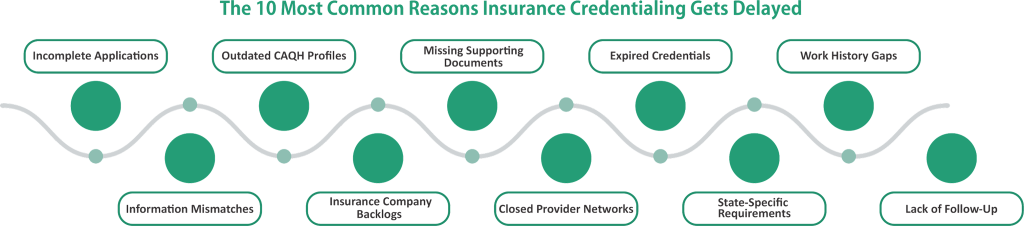
The 10 Most Common Reasons Insurance Credentialing Gets Delayed
While credentialing delays are common, they are often caused by a handful of recurring issues. Identifying these problems early can save weeks or even months of unnecessary waiting.
1. Incomplete Applications
Missing information is one of the leading causes of delays. Even a small omission can prevent a payer from moving an application forward.
2. Outdated CAQH Profiles
Insurance companies frequently rely on CAQH data during credentialing. If your profile hasn’t been updated or attested, processing may stop until corrections are made.
3. Missing Supporting Documents
Required documents such as malpractice insurance certificates, licenses, or board certifications are often overlooked during submission.
4. Expired Credentials
An expired license, DEA registration, or malpractice policy can immediately trigger delays and additional reviews.
5. Work History Gaps
Unexplained employment gaps may require further documentation before approval can proceed.
6. Information Mismatches
Differences in names, addresses, tax IDs, or NPI records can create verification issues.
7. Insurance Company Backlogs
Many payers process thousands of applications each year. Staffing shortages and high application volumes frequently increase wait times.
8. Closed Provider Networks
Some insurance companies limit the number of providers they accept in specific specialties or geographic areas, which can slow approvals significantly.
9. State-Specific Requirements
Certain states impose additional verification requirements that extend processing timelines.
10. Lack of Follow-Up
Applications can stall for weeks if providers fail to check status updates or respond promptly to document requests.
Even when delays are unavoidable, staying organized and proactive can prevent small issues from becoming major setbacks.
How to Speed Up Insurance Credentialing?
Although you can’t control every aspect of the credentialing process, there are several steps you can take to reduce delays and improve your chances of faster approval.
Keep Your CAQH Profile Updated
Review your CAQH profile regularly and ensure all information is accurate, complete, and properly attested.
Gather Documents Before Applying
Create a centralized credentialing file that includes:
- State licenses
- DEA registration
- NPI information
- Curriculum vitae (CV)
- Board certifications
- Malpractice insurance certificates
- Hospital affiliations
Having everything ready before submission reduces the likelihood of follow-up requests.
Start Early
Ideally, providers should begin credentialing at least four to six months before their desired participation date. Waiting until the last minute often leads to revenue disruptions.
Follow Up Consistently
Contact payers every one to two weeks to verify application status and identify issues before they become significant delays.
Track Every Application
Maintain a tracking system that records:
- Submission dates
- Required documents
- Contact information
- Status updates
- Follow-up schedules
A simple spreadsheet can make a significant difference in keeping applications on track.
Consider Professional Credentialing Support
For growing practices, outsourcing credentialing can reduce administrative burdens and help avoid costly mistakes that delay approvals.
Credentialing vs. Contracting vs. Enrollment
One of the biggest misconceptions among healthcare providers is that credentialing and enrollment are the same thing. In reality, they are separate processes, and confusing them often leads to frustration.
| Process | Purpose |
| Credentialing | Verifies provider qualifications |
| Contracting | Establishes reimbursement terms and participation agreements |
| Enrollment | Activates billing privileges with the payer |
| Recredentialing | Periodic review of provider qualifications |
A provider may receive credentialing approval but still be unable to submit claims because contracting or enrollment has not been completed.
For example, a physician might successfully pass credentialing in June but remain unable to bill until the payer activates enrollment in July or August. This distinction is critical because many providers mistakenly believe their credentialing application is delayed when another process is actually causing the hold-up.
Real-World Example: Why One Provider Gets Approved in 45 Days While Another Waits 6 Months
Credentialing timelines can vary dramatically, even between providers in the same specialty.
Provider A: Fast Approval
A physician submits a complete application with:
- Updated CAQH profile
- Current licenses
- Active malpractice coverage
- No work history gaps
The payer quickly verifies credentials, and approval arrives within 45 days.
Provider B: Extended Delay
Another physician submits an application with:
- Missing malpractice documentation
- Outdated CAQH information
- Address discrepancies
- Multiple requests for corrections
Each issue adds additional review time, resulting in a six-month approval process.
The difference often isn’t the payer itself; it’s the quality and completeness of the application submitted.
What Happens If You See Patients Before Credentialing Is Complete?
This is one of the most important questions providers ask, yet many articles barely address it.
In most situations, seeing patients before credentialing approval creates significant financial risks.
Potential consequences include:
- Claim denials
- Delayed reimbursements
- Out-of-network payment rates
- Revenue loss
- Administrative rework
- Patient billing disputes
Some payers allow retroactive effective dates under specific circumstances, but these policies vary widely. Providers should never assume that claims submitted before approval will automatically be paid.
Before scheduling insured patients, confirm your effective participation date directly with the payer. A few weeks of caution can prevent months of reimbursement issues later.
Can Insurance Credentialing Be Backdated?
In some cases, yes. Certain insurance companies allow credentialing approvals to be applied retroactively, meaning claims for services provided before the official approval date may still be eligible for reimbursement.
However, backdating is far from guaranteed.
The ability to receive a retroactive effective date depends on factors such as:
- The insurance payer’s policies
- When the application was submitted
- Whether the provider met all credentialing requirements
- State-specific regulations
- Contract terms
For example, some payers may allow reimbursement back to the application receipt date, while others only recognize the official approval date.
Providers should never rely on retroactive credentialing as a financial strategy. Even when backdating is available, the process can involve additional reviews, delayed payments, and administrative complications.
Before treating patients under a new payer relationship, it’s always best to verify your participation status and effective date directly with the insurance company.
How Credentialing Delays Impact Practice Revenue?
Every day a provider remains uncredentialed can have a direct impact on the financial health of a practice.
When credentialing is delayed, providers may face:
- Delayed insurance reimbursements
- Reduced patient volume
- Increased out-of-network claim denials
- Cash flow challenges
- Administrative overhead
- Slower practice growth
For new practices, the consequences can be even more severe. Many providers underestimate how much revenue depends on timely payer participation.
Consider a provider who expects to see 15–20 insured patients per day. If credentialing is delayed by three additional months, the lost revenue opportunity can quickly reach tens of thousands of dollars.
This is why credentialing should be treated as a revenue cycle priority rather than a simple administrative task.
What to Do If Your Credentialing Has Been Stuck for Months
If your application has exceeded the expected timeline, don’t assume it will resolve itself. Taking action early can help uncover issues before they cause further delays.
Verify the Application Status
Contact the payer and confirm:
- The application was received
- All required documents are on file
- No additional information is needed
- The application is actively under review
Request a Dedicated Representative
Whenever possible, work with a specific credentialing representative instead of speaking with a different person during each follow-up call.
Review Your Documentation
Double-check all submitted information for:
- Missing documents
- Expired credentials
- Address discrepancies
- Incomplete work history
- CAQH inaccuracies
Escalate When Necessary
If your application has been stalled for several months with no progress, ask to speak with a supervisor or credentialing manager.
Document Every Interaction
Keep records of:
- Call dates
- Representative names
- Status updates
- Email communications
- Requested corrections
Detailed records can become invaluable if disputes arise later.
Best Practices to Prevent Future Credentialing Delays
Successful credentialing often comes down to preparation and consistency.
Healthcare organizations that experience the fewest delays typically follow these best practices:
- Maintain an updated CAQH profile year-round
- Store credentialing documents in a centralized location
- Track license and certification expiration dates
- Start credentialing at least 4–6 months in advance
- Conduct regular application audits
- Follow up with payers consistently
- Monitor enrollment and contracting separately from credentialing
By implementing these habits, providers can reduce delays, minimize revenue interruptions, and create a smoother onboarding experience with insurance networks.
Final Thoughts
Insurance credentialing taking months is often normal, with most providers waiting between 60 and 180 days for approval. While some delays are unavoidable, many can be prevented by keeping your CAQH profile updated, submitting complete documentation, and following up regularly with payers.
If your application has been stalled for an extended period, professional support can help identify issues and keep the process moving. Learn more about insurance credentialing and provider enrollment services at DR Credentialing.
The sooner credentialing is completed, the sooner your practice can start seeing patients and generating revenue with confidence.