Serving Veterans through the VA Community Care Network can open the door to new patient opportunities while allowing your practice to make a meaningful impact in the community. As demand for healthcare services continues to grow, the Department of Veterans Affairs relies on qualified community providers to deliver timely care when services are unavailable or difficult to access through VA facilities.
Whether you’re a physician, mental health professional, therapist, dentist, home health provider, or healthcare organization, becoming a VA Community Provider can help diversify your patient base, strengthen your referral pipeline, and position your practice as a trusted resource for Veterans.
While the enrollment and credentialing process may seem complex at first, understanding the requirements and following the right steps can make the path to approval much smoother.
What Is a VA Community Provider?
A VA Community Provider is a healthcare professional or organization that delivers medical services to eligible Veterans through the VA Community Care Program. These providers operate outside of VA medical facilities but are authorized to treat Veterans when the Department of Veterans Affairs determines that community-based care is the best option.
Unlike healthcare professionals directly employed by the VA, community providers work within their own private practices, hospitals, clinics, or healthcare organizations while receiving referrals for Veteran care. This allows Veterans to access quality healthcare closer to home and reduces wait times for essential medical services.
VA Community Providers can offer a wide range of services, including primary care, specialty care, mental health treatment, dental services, rehabilitation therapies, home healthcare, hospice care, and telehealth consultations. By joining the VA Community Care Network, providers become part of a nationwide effort to improve healthcare access for millions of Veterans.
Why Healthcare Providers Are Joining the VA Community Care Network
More healthcare organizations and independent practitioners are seeking opportunities to join the VA Community Care Network because it provides access to a growing patient population while allowing providers to make a meaningful impact on the lives of Veterans.
One of the biggest advantages is the opportunity to receive referrals from the VA. For many practices, these referrals help create a steady flow of patients and support long-term growth. This can be particularly beneficial for providers in specialties such as mental health, primary care, physical therapy, home health, and specialty medicine, where demand continues to increase.
Beyond business growth, many providers value the chance to serve those who have served the country. Veterans often require ongoing healthcare support, creating opportunities to build lasting patient relationships while contributing to community well-being.
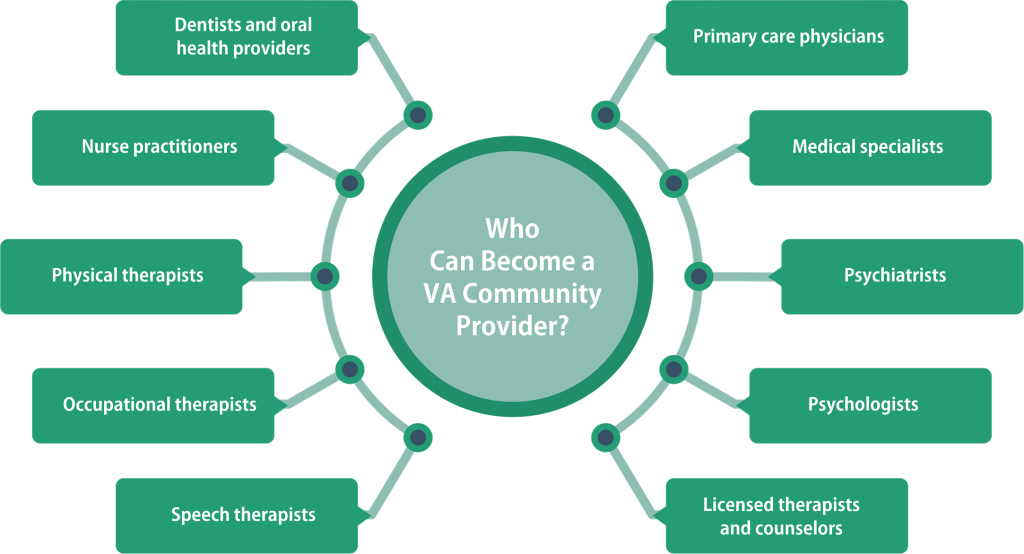
Who Can Become a VA Community Provider?
The VA Community Care Program is designed to work with a broad range of healthcare professionals and organizations. Eligibility extends beyond physicians and includes many providers who deliver essential healthcare services to Veterans.
Healthcare professionals who commonly qualify include:
- Primary care physicians
- Medical specialists
- Psychiatrists
- Psychologists
- Licensed therapists and counselors
- Dentists and oral health providers
- Physical therapists
- Occupational therapists
- Speech therapists
- Nurse practitioners
- Physician assistants
Healthcare organizations may also qualify, including:
- Hospitals and health systems
- Outpatient clinics
- Home health agencies
- Hospice providers
- Skilled nursing facilities
- Rehabilitation centers
- Diagnostic imaging facilities
- Telehealth service providers
Because eligibility requirements can vary based on specialty and location, providers should ensure they meet all licensing, credentialing, and compliance standards before beginning the enrollment process.
VA Community Provider Eligibility Requirements
Before applying to become a VA Community Provider, healthcare professionals and organizations must meet several key requirements. These standards help ensure Veterans receive high-quality care from qualified providers.
Active Professional License: Providers must hold an active, unrestricted license in the state where services will be delivered. Any disciplinary actions, suspensions, or licensing restrictions may affect eligibility.
National Provider Identifier (NPI): An active National Provider Identifier (NPI) is required for participation in the network. This identifier is used for provider verification, billing, and administrative purposes.
Professional Liability Insurance: Most providers must maintain appropriate malpractice or professional liability insurance coverage. Insurance requirements may vary depending on specialty and practice type.
Credentialing and Background Verification: The credentialing process typically includes verification of education, training, certifications, work history, licensure status, and professional references. Providers may also undergo background screenings as part of the review process.
Compliance With Federal Healthcare Standards: Applicants must comply with applicable healthcare regulations and maintain good standing with federal healthcare programs. Providers with certain sanctions, exclusions, or compliance issues may be deemed ineligible.
Required Documentation: During the application process, providers are often required to submit documents such as:
- Professional licenses
- Board certifications
- Proof of liability insurance
- Tax identification information
- Practice information
- Credentialing records
- CAQH profile information (when applicable)
Meeting these requirements before starting the application can help reduce delays and improve the chances of a smooth approval process.
VA Community Care Network (CCN)
The Community Care Network (CCN) is the VA’s contracted provider network that connects eligible Veterans with healthcare services in their local communities. Rather than delivering all care through VA facilities, the Department of Veterans Affairs partners with qualified community providers to ensure Veterans can access timely and convenient healthcare when needed.
The network is administered through regional contractors that manage provider enrollment, credentialing, referrals, and claims processing. Healthcare providers interested in serving Veterans typically join the network through the contractor responsible for their geographic region.
The primary purpose of the Community Care Network is to improve access to care for Veterans who may face challenges such as:
- Long wait times for appointments
- Significant travel distances to VA facilities
- Limited availability of specialized services
- Clinical needs that cannot be met within the VA system
Once approved, providers can receive authorized referrals and begin delivering care to Veterans while following VA Community Care policies and procedures.
Community Care Network vs. Veterans Care Agreements
While most providers participate through the Community Care Network, some may work with the VA through Veterans Care Agreements (VCAs). These agreements are generally used when adequate providers are unavailable within the existing network and additional community resources are needed to meet Veteran healthcare demands.
For most healthcare professionals and organizations, joining the Community Care Network remains the primary pathway to becoming a VA Community Provider.
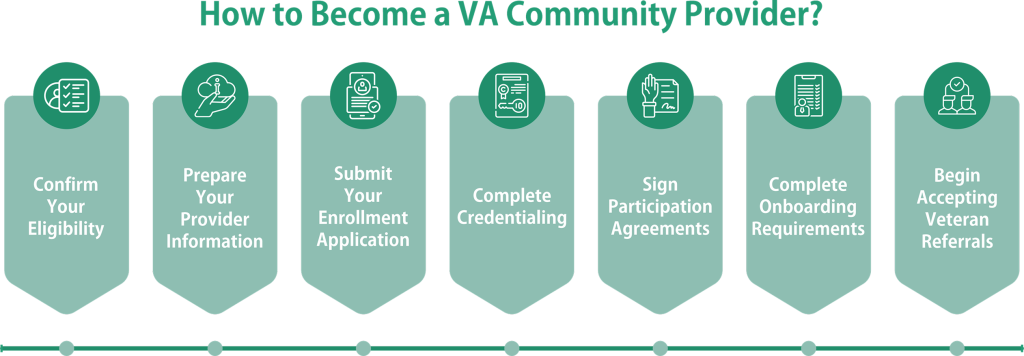
How to Become a VA Community Provider?
Becoming a VA Community Provider involves several steps, from verifying eligibility to completing credentialing and receiving final approval. Understanding the process beforehand can help providers avoid unnecessary delays and improve their chances of successful enrollment.
Step 1: Confirm Your Eligibility
Before beginning the application process, review all eligibility requirements to ensure your practice qualifies. This includes maintaining active licenses, liability insurance, required certifications, and compliance with federal healthcare standards.
Gathering all necessary documentation in advance can significantly streamline the application process.
Step 2: Prepare Your Provider Information
Most applications require detailed information about your practice, including:
- Business and contact information
- Tax identification details
- Provider credentials
- Service locations
- Specialty information
- Insurance coverage
- Professional certifications
Having accurate and up-to-date information readily available can help prevent application errors.
Step 3: Submit Your Enrollment Application
Providers must complete the enrollment process through the appropriate Community Care Network administrator serving their region. During this stage, applicants provide all required documentation and information for review.
Incomplete applications are one of the most common reasons for delays, so careful attention to detail is essential.
Step 4: Complete Credentialing
Credentialing is one of the most important stages of the enrollment process. During this review, the network verifies qualifications, licenses, education, training, and professional standing. To ensure your documentation satisfies strict federal vetting rules without triggering multi-month delays, utilizing dedicated physician credentialing services can help you audit your profiles and clear the primary-source verification process seamlessly.
Step 5: Sign Participation Agreements
After credentialing approval, providers must review and sign regional participation agreements outlining network responsibilities, compliance obligations, and care delivery requirements. Navigating these regional reimbursement schedules can be legally complex, which is why practices often leverage professional healthcare contracting services to analyze fee terms and safeguard their practice’s long-term financial performance before signing.
Step 6: Complete Onboarding Requirements
Before receiving referrals, providers may need to complete onboarding activities related to:
- Referral management
- Documentation standards
- Claims submission procedures
- Communication protocols
- Community Care policies
Step 7: Begin Accepting Veteran Referrals
Once the enrollment process is complete, providers can begin receiving authorized referrals and delivering healthcare services to eligible Veterans through the Community Care Program.
How Long Does It Take to Become a VA Community Provider?
The approval timeline can vary depending on provider type, specialty, credentialing requirements, and application completeness. While some providers complete the process relatively quickly, others may experience delays due to missing documentation or credentialing issues.
In general, the process may take anywhere from several weeks to a few months.
Several factors can influence approval speed, including:
- Accuracy of submitted information
- Completeness of credentialing documents
- Licensing verification timelines
- Insurance verification
- Background reviews
- Response time to additional information requests
Providers who prepare documentation in advance and promptly respond to follow-up requests often experience a smoother enrollment process.
It’s important to view enrollment as a long-term investment rather than expecting immediate approval. Taking the time to submit a complete and accurate application can help reduce delays and accelerate participation in the network.
Common Mistakes That Delay VA Provider Approval
Many application delays are avoidable. Understanding the most common mistakes can help providers move through the enrollment process more efficiently.
Submitting Incomplete Applications:
Missing information is one of the leading causes of processing delays. Even small omissions can trigger additional reviews and requests for clarification.
Providing Outdated Credentialing Information:
Expired licenses, outdated certifications, or incomplete provider profiles can slow the verification process and create unnecessary complications.
Missing Insurance Documentation:
Failure to provide current liability insurance information may prevent applications from moving forward until the required documentation is received.
Inaccurate Business Information:
Errors involving tax identification numbers, practice addresses, provider names, or contact details can create verification issues and delay approval.
Delayed Responses to Follow-Up Requests:
During credentialing, applicants may be contacted for additional information. Delays in responding can significantly extend processing timelines.
Failing to Maintain Compliance Requirements:
Licensing issues, sanctions, exclusions, or unresolved compliance concerns can impact eligibility and potentially result in application denial.
By carefully reviewing all application materials before submission and maintaining accurate records, providers can avoid many of the obstacles that commonly delay enrollment in the VA Community Care Network.
What Happens After You Become a VA Community Provider?
Receiving approval is only the beginning. Once enrolled in the VA Community Care Network, providers must understand how referrals, authorizations, documentation, and care coordination work to ensure a smooth experience for both their practice and Veteran patients.
Receiving Referrals
Community providers generally do not schedule Veteran appointments independently without authorization. Most patients are referred through the VA after eligibility for community care has been determined.
The referral typically includes details such as:
- Authorized services
- Number of approved visits
- Referral period
- Clinical information
- Special instructions
Providers should review referral documents carefully before scheduling appointments.
Managing Authorizations
Authorization is one of the most important aspects of VA Community Care. Services delivered outside the approved authorization may not be eligible for reimbursement.
Before providing treatment, practices should verify:
- Services covered
- Visit limits
- Authorization expiration dates
- Referral requirements
Maintaining a reliable authorization tracking process can help reduce claim denials and administrative issues.
Coordinating Care With the VA
Community providers are expected to collaborate with the VA throughout a Veteran’s treatment journey. This may include sharing clinical updates, treatment plans, progress reports, and discharge information when required.
Effective communication helps ensure continuity of care and allows the VA to remain informed about the Veteran’s health status.
Meeting Documentation Requirements
Accurate and timely documentation is essential. Providers may be required to submit clinical records and treatment information within specific timeframes.
Important records often include:
- Initial evaluations
- Progress notes
- Diagnostic findings
- Treatment plans
- Discharge summaries
Strong documentation practices can improve care coordination and reduce administrative complications.
Requesting Additional Care When Needed
If a Veteran requires services beyond the original authorization, providers may need to request additional approval before continuing treatment. Waiting until an authorization expires can create interruptions in care and reimbursement challenges.
For this reason, many successful VA Community Providers closely monitor referral expiration dates and initiate renewal requests early.
VA Community Care Billing and Reimbursement
One of the most frequently asked questions among healthcare providers is how reimbursement works after joining the network. Understanding the billing process is critical for maintaining healthy cash flow and minimizing claim-related issues.
How Billing Works?
After providing authorized care, providers submit claims according to Community Care billing requirements. Claims must accurately reflect the services delivered and match the approved authorization.
Accurate coding and documentation play a major role in timely reimbursement.
Common Causes of Claim Denials
Many payment issues occur because of administrative errors rather than clinical problems. Common reasons for denied or delayed claims include:
- Missing authorizations
- Incorrect billing codes
- Expired referrals
- Incomplete documentation
- Data entry errors
- Services provided outside authorization limits
Implementing quality control procedures before claim submission can significantly reduce these issues.
Payment Timelines
Reimbursement timelines can vary depending on claim accuracy, supporting documentation, and processing requirements. Claims submitted correctly the first time generally experience fewer delays.
Practices should establish internal workflows to track claim status and address any payment issues promptly.
Best Practices for Faster Reimbursement
Providers can improve billing efficiency by:
- Verifying authorizations before treatment
- Maintaining complete clinical documentation
- Submitting claims promptly
- Tracking claim status regularly
- Training staff on Community Care billing requirements
A proactive billing strategy can help practices avoid revenue disruptions and improve overall operational efficiency.
Technology and Administrative Requirements
Successfully serving Veterans requires more than clinical expertise. Providers also need the administrative systems and technology necessary to manage referrals, documentation, communication, and billing efficiently.
Electronic Health Record (EHR) Systems
A reliable electronic health record system helps providers maintain accurate patient records and streamline documentation requirements.
An effective EHR system should support:
- Clinical documentation
- Treatment planning
- Record storage
- Secure information sharing
- Reporting capabilities
Secure Communication Processes
Because healthcare information is sensitive, providers must use secure communication methods when exchanging patient information and clinical records.
Strong security measures help protect patient privacy while maintaining compliance with healthcare regulations.
Referral Tracking Systems
Managing multiple authorizations and referral periods manually can quickly become overwhelming. Many successful providers use referral tracking systems to monitor:
- Referral status
- Authorization limits
- Expiration dates
- Required follow-ups
- Additional care requests
These systems help reduce missed deadlines and improve operational efficiency.
Claims Management Processes
An organized billing workflow is essential for maximizing reimbursement and reducing claim errors.
Key areas to monitor include:
- Claim submission timelines
- Payment status
- Denials and appeals
- Authorization verification
- Documentation requirements
Staff Training and Compliance
Front-desk staff, billing teams, and clinical personnel should understand Community Care procedures and responsibilities. Ongoing training can help practices stay compliant while delivering a better experience for Veteran patients.
Investing in the right technology and administrative infrastructure not only improves efficiency but also positions providers for long-term success within the VA Community Care Network.
Challenges of Being a VA Community Provider
While joining the VA Community Care Network offers many benefits, providers should also understand the operational challenges that may arise. Knowing what to expect can help practices prepare effective systems and avoid common frustrations.
Managing Administrative Responsibilities
Compared to some traditional healthcare arrangements, VA Community Care often involves additional administrative tasks related to referrals, authorizations, documentation, and communication requirements.
Practices that establish dedicated workflows early are often better equipped to handle these responsibilities efficiently.
Navigating Authorization Requirements
One of the most common challenges is ensuring services remain within authorized limits. Missed authorization renewals or misunderstandings regarding approved services can create billing complications and treatment delays.
Handling Documentation Deadlines
Timely documentation is critical for both care coordination and reimbursement. Providers who fail to submit required records on time may encounter administrative issues or payment delays.
Monitoring Claims and Payments
Like any healthcare reimbursement system, billing errors can occur. Successful providers actively monitor claims, address denials quickly, and maintain organized records to support payment requests.
Balancing Patient Volume
As referral volume grows, practices must ensure they have adequate staffing, scheduling capacity, and administrative support to maintain quality care without overwhelming resources.
Staying Current With Program Requirements
Policies, procedures, and administrative requirements can change over time. Providers who stay informed and participate in ongoing training are generally better positioned for long-term success.
VA Community Provider vs. Traditional Insurance Networks
Healthcare providers often compare VA Community Care participation with traditional commercial insurance networks when evaluating growth opportunities. While both can expand patient access, there are important differences to consider.
| Feature | VA Community Care Network | Traditional Insurance Networks |
| Patient Source | VA-authorized referrals | General insured population |
| Referral Process | Authorization-based | Varies by insurer |
| Credentialing Requirements | Extensive verification process | Moderate to extensive |
| Care Coordination | High involvement with VA | Usually insurer-dependent |
| Documentation Requirements | Often more detailed | Varies by payer |
| Billing Structure | Authorization-driven | Policy-driven |
| Community Impact | Direct support for Veterans | Broad patient population |
The right choice is not necessarily one or the other. Many providers successfully participate in both VA Community Care and commercial insurance networks to diversify their patient base and revenue sources.
For providers who value serving Veterans while expanding access to care, the Community Care Network can be a valuable addition to an existing practice.
Final Thoughts
Becoming a VA Community Provider offers healthcare professionals and organizations an opportunity to expand their practice while making a meaningful difference in the lives of Veterans. Through the VA Community Care Network, providers can deliver essential healthcare services to patients who may otherwise face barriers to timely treatment.
Although the enrollment process requires careful preparation, credentialing, and ongoing compliance, the long-term benefits can be substantial. Access to Veteran referrals, expanded community presence, and the ability to support those who have served the nation make participation an attractive option for many healthcare providers.