
Getting credentialed with Blue Cross Blue Shield can feel like a waiting game, especially when delayed approvals mean delayed reimbursements. Most providers want one clear answer: how long does BCBS credentialing actually take? In most cases, the process can take anywhere from 45 to 120 days, depending on your specialty, state, documentation accuracy, and application volume.
Exploring the timeline, common bottlenecks, and ways to avoid delays can help you get approved faster and start billing sooner. Whether you’re a physician, therapist, nurse practitioner, or group practice, knowing what to expect can save both time and revenue.
What Is BCBS Credentialing?
BCBS credentialing is the process of verifying a healthcare provider’s qualifications before they can join a Blue Cross Blue Shield insurance network. During this process, BCBS reviews your education, licenses, certifications, work history, malpractice coverage, and professional background to ensure you meet their standards.
Credentialing is required for:
- Physicians
- Therapists
- Nurse practitioners
- Behavioral health providers
- Group practices
- Specialists
Many providers confuse credentialing with enrollment. Credentialing verifies your qualifications, while enrollment activates your ability to bill BCBS for services. Both steps are essential if you want to become an in-network provider and receive reimbursements without delays.
How Long Does BCBS Credentialing Usually Take?
The average BCBS credentialing timeline ranges from 45 to 120 days. However, the exact timeframe depends on your state, specialty, application accuracy, and how quickly documents are verified.
Here’s a typical breakdown of the process:
| Process Step | Estimated Timeline |
| CAQH Profile Setup | 3–7 Days |
| Application Submission | 1–2 Weeks |
| Primary Source Verification | 30–60 Days |
| Committee Review | 2–4 Weeks |
| Final Enrollment | 1–2 Weeks |
Some BCBS plans move faster than others because Blue Cross Blue Shield operates through independent regional companies. A provider in one state may get approved within 60 days, while another may wait over 120 days for the same specialty.
Incomplete paperwork, expired documents, and CAQH issues are some of the biggest reasons applications take longer than expected.
Factors That Affect BCBS Credentialing Time
Several factors can either speed up or delay your BCBS credentialing approval. Even small errors in your application can add weeks to the process.
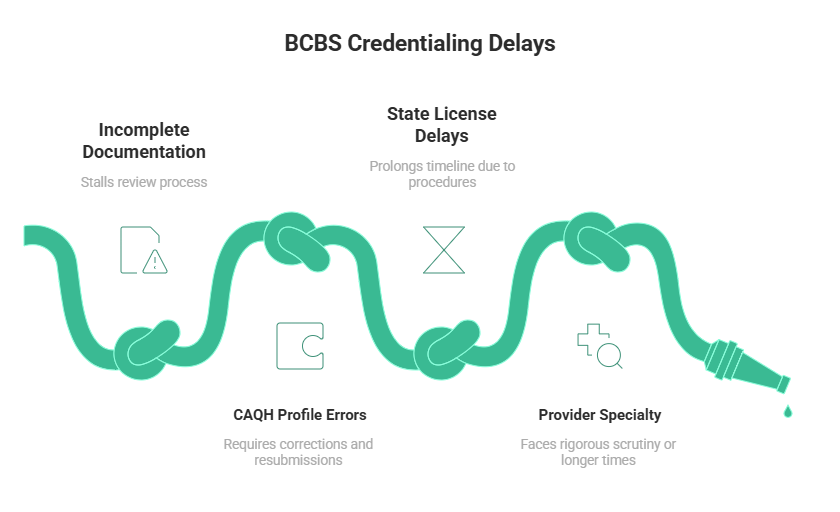
Incomplete Documentation: Missing licenses, malpractice certificates, or signatures often cause immediate delays.
CAQH Profile Errors: If your CAQH profile contains outdated information or hasn’t been attested recently, BCBS may pause verification until corrections are made.
State License Verification Delays: Some state medical boards process verifications slowly, which can extend the credentialing timeline.
Provider Specialty: Behavioral health providers and specialists sometimes face longer review periods due to higher application volumes and additional verification requirements.
Group vs Solo Practice
Group practices usually require additional documentation, making the process more complex than individual provider credentialing.
Malpractice or Work History Issues
Any malpractice claims, gaps in employment history, or inconsistencies in your application can trigger additional reviews.
Understanding these factors early can help providers avoid unnecessary setbacks and reduce lost revenue from delayed billing.
BCBS Credentialing Requirements
Before starting the credentialing process, providers should prepare all required documents to avoid delays and repeated follow-ups.
Common BCBS Credentialing Requirements
- NPI number
- State medical license
- DEA certificate
- Board certifications
- CAQH profile
- Malpractice insurance
- Work history and resume
- Hospital privileges (if applicable)
- W-9 form
- ECFMG certificate for international graduates
Keeping these documents updated and organized can significantly improve approval speed. Many providers experience delays simply because one document expires during the review process.
A complete and accurate application not only speeds up credentialing but also increases the chances of faster network enrollment and reimbursement activation.
Step-by-Step BCBS Credentialing Process
Understanding each stage of the BCBS credentialing process can help providers stay prepared and avoid unnecessary delays.
Step 1: Complete Your CAQH Profile
Most BCBS plans use CAQH to collect provider information. Your profile must be fully completed and attested before credentialing begins.
Step 2: Submit the BCBS Application
Providers must submit a credentialing application along with all required supporting documents. Any missing information can pause the review process.
Step 3: Primary Source Verification
BCBS verifies your:
- Medical license
- Education
- Board certifications
- Work history
- Malpractice coverage
This is usually the longest phase of the process.
Step 4: Credentialing Committee Review
Once verification is complete, your application is reviewed by a credentialing committee for final approval.
Step 5: Provider Enrollment & Contracting
After approval, BCBS finalizes your contract and activates your participation in the network. Only then can providers begin billing for services.
Many providers assume approval means immediate billing access, but enrollment activation can still take additional time.

How to Speed Up BCBS Credentialing?
While providers cannot fully control the BCBS review timeline, there are several ways to reduce delays and improve approval speed.
Keep Your CAQH Profile Updated: Regularly attest your CAQH profile and ensure all information matches your application exactly.
Submit Complete Documentation: Double-check licenses, malpractice insurance, and certifications before submission to avoid repeated requests from BCBS.
Respond Quickly to Follow-Ups: Credentialing departments often request clarifications or updated documents. Fast responses help keep your application moving.
Monitor Your Application Status: Following up weekly can help identify problems early before they become major delays.
Work With Credentialing Specialists: Professional credentialing services can help providers avoid errors, track submissions, and accelerate enrollment timelines.
A well-managed application can often reduce weeks of unnecessary waiting and help providers start generating revenue sooner.
Common Reasons BCBS Credentialing Gets Delayed
Credentialing delays are common, but most issues are preventable when providers understand the most frequent problems.
Expired Documents: An expired malpractice policy or medical license can immediately pause the application process.
Inconsistent Information: Differences between your CAQH profile, application, and supporting documents can trigger additional verification reviews.
Employment History Gaps: Unexplained gaps in work history often require further documentation from providers.
Missing Signatures or Forms: Simple administrative errors are one of the leading causes of credentialing delays.
State Verification Backlogs: Some licensing boards and verification agencies process requests slowly, which affects BCBS timelines.
Malpractice Claims Review: Providers with prior malpractice cases may face additional scrutiny and longer committee reviews.
Even small issues can delay approval for several weeks, making accuracy and organization critical throughout the process.
BCBS Credentialing Timeline by Provider Type
Credentialing timelines can vary depending on the provider’s specialty and practice type.
| Provider Type | Estimated Timeline |
| Physicians | 60–120 Days |
| Therapists | 45–90 Days |
| Nurse Practitioners | 60–90 Days |
| Behavioral Health Providers | 90–180 Days |
| Group Practices | 90–150 Days |
Behavioral health providers often experience longer timelines due to high demand and increased application volume. Group practices may also take longer because multiple providers and locations require verification.
BCBS Credentialing vs Recredentialing
BCBS credentialing is required when a provider first joins the network, while recredentialing is the periodic review conducted to maintain network participation.
Most BCBS plans require recredentialing every 2–3 years. During this process, providers must update:
- Medical licenses
- Certifications
- Malpractice insurance
- Work history
- CAQH information
Recredentialing is usually faster than initial credentialing because much of the provider’s information is already on file. However, outdated documents or missing updates can still lead to network interruptions or delayed reimbursements.
Providers who keep their records updated year-round typically experience a smoother recredentialing process.
What Happens After BCBS Credentialing Approval?
Once BCBS approves your credentialing application, several final steps occur before you can officially start billing as an in-network provider.
Contract Finalization
BCBS sends the provider agreement outlining reimbursement terms and participation details.
Effective Date Assignment
Your effective date determines when you can begin seeing BCBS patients and submitting claims.
System & Portal Setup
Providers may receive access to BCBS provider portals for claims, eligibility checks, and payment management.
Billing Activation
After enrollment is activated, providers can begin submitting claims for reimbursement.
Many providers mistakenly assume they can bill immediately after approval. In reality, billing should only begin after the official effective date is confirmed.
Conclusion
BCBS credentialing can take anywhere from 45 to 120 days, depending on your specialty, state, and how accurately your application is submitted. Delays often happen because of incomplete documentation, CAQH issues, or verification backlogs, making preparation and organization essential for faster approval.
Providers who stay proactive throughout the process can reduce delays, accelerate enrollment, and start billing sooner. If you want to simplify the credentialing process and avoid costly setbacks, visit Dr Credentialing for professional support with provider enrollment and insurance credentialing services.