Medical credentialing is essential for healthcare providers who want to participate with insurance payers, maintain compliance, and keep their practice operations running smoothly. However, managing applications, provider documents, payer requirements, follow-ups, renewals, and recredentialing can quickly become a time-consuming administrative burden.
Outsourcing medical credentialing to Dr. Credentialing gives healthcare practices access to dedicated credentialing support while allowing physicians and staff to spend less time on paperwork and more time focusing on their patients and practice. From reducing administrative workload and credentialing errors to streamlining provider enrollment and keeping credentials up to date, professional credentialing support can simplify a complex process.
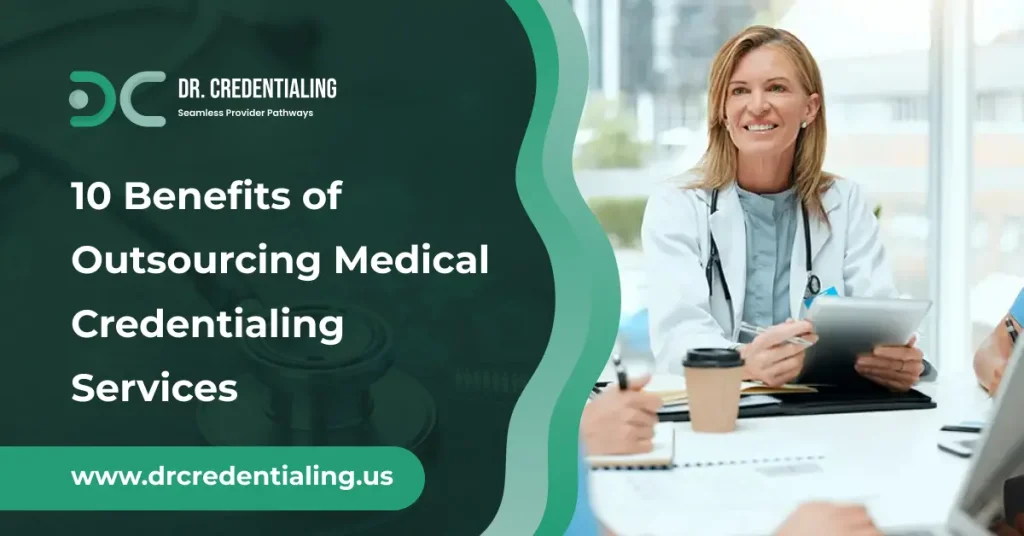
In this guide, we’ll explore 10 key benefits of outsourcing your medical credentialing to Dr. Credentialing and explain why professional support can be a practical solution for growing healthcare practices.
Why Do Healthcare Providers Outsource Medical Credentialing?
Managing credentialing internally may appear straightforward, but the process can become increasingly complicated as a practice adds providers, participates with multiple insurance companies, or needs to manage recurring renewals.
Healthcare practices may need to monitor applications, gather documents, update provider information, respond to payer requests, follow up on pending applications, and keep track of expiration dates. Handling all of these responsibilities internally can place considerable pressure on administrative teams.
Outsourcing medical credentialing allows practices to delegate these administrative responsibilities to a specialized credentialing team. Instead of having staff spend hours tracking applications and communicating with payers, the practice can have dedicated support managing important credentialing activities.
For growing practices, outsourcing can also provide a more organized approach to credentialing without requiring the practice to build a large internal credentialing department.
10 Benefits of Outsourcing Your Medical Credentialing to Dr. Credentialing
1. Save Time and Reduce Administrative Work
One of the most significant benefits of outsourcing medical credentialing is the potential to reduce the amount of administrative work handled by physicians and practice staff.
Credentialing can involve numerous forms, supporting documents, payer applications, follow-ups, verification activities, and status updates. When these responsibilities are handled internally, staff members may need to dedicate substantial time to tasks that do not directly contribute to their primary responsibilities.
With professional credentialing support, these activities can be managed by a dedicated team. This can help your practice spend less time dealing with credentialing paperwork and more time managing daily operations.
For physicians, reducing administrative responsibilities can also mean having more time available for patient-related responsibilities rather than spending hours dealing with credentialing applications and payer correspondence.
Practices can explore dedicated physician credentialing services when they need specialized support managing provider credentialing requirements.
2. Reduce Credentialing Errors
Accuracy is extremely important throughout the medical credentialing process. Missing information, inconsistent provider details, expired documentation, or incomplete applications can create unnecessary administrative complications.
A professional credentialing team can review applications and supporting documentation before submission, helping identify missing or inconsistent information. Organized document management can also make it easier to maintain accurate provider records.
Outsourcing does not eliminate every possibility of error, particularly because payer requirements and provider circumstances can vary. However, having credentialing specialists involved can provide an additional layer of organization and review.
For healthcare practices, better credentialing organization can help reduce avoidable issues associated with incomplete or inaccurate applications.
3. Help Streamline the Provider Credentialing Process
Credentialing involves more than completing an application and waiting for approval. Depending on the payer and provider, the process can involve documentation collection, verification, application submission, follow-up, and responses to requests for additional information.
A dedicated credentialing team can help coordinate these different stages and monitor application progress.
Rather than leaving staff to determine the status of multiple applications individually, an outsourced team can maintain organized records of submissions, outstanding information, payer communication, and follow-up activities.
Although credentialing timelines vary depending on the payer, provider, application, and other circumstances, organized management can help prevent avoidable administrative delays.
4. Reduce the Workload on Your In-House Staff
Your administrative team already has multiple responsibilities. Depending on the size and structure of your practice, employees may handle scheduling, billing, patient communication, insurance-related tasks, documentation, and other operational duties.
Adding credentialing to this workload can make it difficult for staff to give each responsibility the attention it deserves.
Outsourcing allows credentialing responsibilities to be handled externally while your internal team remains focused on core practice operations.
This can be particularly useful for growing practices that are adding physicians or other healthcare providers and need to manage additional credentialing and enrollment requirements.
Instead of continually expanding internal administrative responsibilities, practices can use specialized healthcare credentialing services to support their credentialing needs.
5. Improve Payer Enrollment Management
Credentialing and payer enrollment are closely connected components of the provider onboarding process.
A provider may need to complete credentialing requirements before participating with an insurance payer, while enrollment establishes the provider’s participation within the payer’s system. Managing these processes requires accurate provider information and careful attention to payer-specific requirements.
Outsourcing can help practices coordinate credentialing and enrollment activities more efficiently.
A professional team may assist with tasks such as preparing payer applications, organizing supporting documentation, monitoring application status, and following up with insurance companies.
For practices working with multiple payers, having a structured enrollment process can be particularly valuable because requirements, procedures, and documentation may differ from one payer to another.
6. Stay on Top of Credentialing Renewals and Recredentialing
Medical credentialing is not a one-time activity.
Providers may need to maintain licenses, certifications, insurance documentation, and other credentials throughout their professional careers. Payers may also require providers to complete recredentialing periodically.
Allowing important credentials or documents to expire can create administrative problems and may affect a provider’s participation status depending on the specific requirement and payer.
Outsourcing credentialing can provide practices with ongoing support for monitoring credential-related information and renewal requirements.
A structured approach can help practices keep track of important dates, update provider information, and prepare required documentation when renewals or recredentialing activities arise.
This ongoing credential maintenance is particularly important for practices managing multiple providers.
7. Access Specialized Credentialing Knowledge
Medical credentialing involves numerous requirements, forms, documents, and administrative procedures. For a practice that does not specialize in credentialing, keeping up with these requirements can be challenging.
Working with a specialized credentialing company gives practices access to professionals whose work is focused on credentialing and enrollment processes.
Depending on the services provided, credentialing specialists may support areas such as:
- Provider credentialing
- Insurance enrollment
- CAQH profile management
- Payer application preparation
- Credential verification
- Recredentialing
- Provider information updates
- Payer follow-up
- Application status tracking
This specialized support can be particularly useful for practices that do not have dedicated credentialing personnel in-house.
8. Improve Credentialing Organization and Tracking
Credentialing becomes increasingly difficult to manage when information is scattered across emails, spreadsheets, documents, and individual staff members.
A structured credentialing process can help practices maintain better visibility into each provider’s status.
For example, credentialing records may need to track:
- Application submission dates
- Payer information
- Outstanding documents
- Follow-up dates
- Application status
- License expiration dates
- Certification expiration dates
- Recredentialing requirements
- Payer correspondence
Professional credentialing support can help organize this information and make it easier to identify pending tasks.
Better organization is especially important for practices with multiple providers, multiple locations, or participation with several insurance networks.
9. Help Reduce Credentialing-Related Revenue Delays
Credentialing and payer enrollment can have an important administrative relationship with the revenue cycle.
When a provider is not properly enrolled with a payer or when provider information is not accurately maintained, the practice may encounter administrative complications related to claims and reimbursement.
Outsourcing does not guarantee higher revenue or eliminate claim-related issues. However, professional credentialing support can help practices manage credentialing and enrollment responsibilities more systematically.
Keeping applications organized, monitoring enrollment status, and maintaining accurate provider information can help reduce administrative obstacles associated with credentialing.
For practices that depend heavily on insurance reimbursement, keeping credentialing activities organized is an important part of maintaining efficient administrative operations.
10. Allow Healthcare Providers to Focus More on Patient Care
Healthcare providers have demanding responsibilities that extend far beyond clinical care. Managing a practice also involves documentation, compliance, staffing, billing, scheduling, and numerous administrative tasks.
Credentialing can add another layer of paperwork and coordination.
By outsourcing credentialing responsibilities, physicians and practice managers can delegate much of this administrative workload to a specialized team.
The goal is not simply to remove paperwork. It is to create a more manageable administrative process so healthcare professionals can dedicate more attention to their patients, teams, and practice operations.
For practices that are expanding or managing multiple providers, professional credentialing support can become an important part of maintaining an organized administrative workflow.
What Services Does Dr. Credentialing Provide?
Choosing a credentialing partner is an important decision because practices need support that aligns with their specific provider and payer requirements.
Dr. Credentialing focuses on helping healthcare providers manage credentialing and enrollment-related administrative processes.
Provider Credentialing
Provider credentialing involves collecting, organizing, and verifying information about healthcare professionals so their qualifications can be reviewed by relevant organizations and payers.
Professional support can help practices manage the documentation and administrative requirements involved in the process.
Insurance Enrollment
Insurance enrollment involves registering providers with insurance payers and managing the associated administrative requirements.
For practices working with multiple insurance companies, having dedicated support can make it easier to organize payer applications and monitor enrollment activities.
CAQH Profile Management
CAQH information is an important component of credentialing for many healthcare providers. Keeping provider information complete and current can help support credentialing and enrollment activities.
Professional assistance with CAQH-related tasks can help practices maintain organized provider information and address required updates.
Recredentialing and Credential Maintenance
Credentialing responsibilities continue after a provider completes the initial credentialing process.
Renewals, recredentialing, license updates, insurance documentation, and other credential-related requirements may need ongoing attention.
A dedicated credentialing service can help practices manage these recurring responsibilities and keep important information organized.
Payer Follow-Up and Application Tracking
Submitting an application is only one part of the credentialing process.
Applications may require follow-up, additional information, clarification, or status checks. Organized tracking helps practices identify where applications stand and which actions may still be required.
This can be especially valuable when a practice is managing multiple providers and payer applications simultaneously.
In-House vs. Outsourced Medical Credentialing
Healthcare practices generally have two options when managing credentialing: maintain the process internally or outsource some or all credentialing responsibilities to a specialized company.
| Factor | In-House Credentialing | Outsourced Credentialing |
| Staff workload | Managed by internal employees | Managed with external support |
| Credentialing expertise | Depends on internal experience | Access to specialized credentialing support |
| Application tracking | Internal responsibility | Can be managed by the credentialing provider |
| Payer follow-ups | Handled by practice staff | Can be delegated |
| Renewals | Requires internal monitoring | Can receive ongoing support |
| Scalability | May require additional internal resources | Can support changing practice needs |
Neither approach is automatically appropriate for every practice. The right choice depends on factors such as the number of providers, payer relationships, internal staffing, credentialing volume, and administrative resources.
For practices that find credentialing time-consuming or difficult to manage internally, outsourcing can provide an alternative way to handle these responsibilities.
Simplify Your Medical Credentialing & Enrollment Process
Managing provider credentialing and payer enrollment can consume valuable time, particularly for practices handling multiple providers and insurance networks. Professional support can help organize applications, documentation, follow-ups, and ongoing credential maintenance so your team can focus on running the practice.
Learn more about medical credentialing & enrollment services in the USA and discover how Dr. Credentialing can support your healthcare practice.
If you are ready to discuss your credentialing requirements, you can also contact Dr. Credentialing to learn more about available services.
Summary
Medical credentialing is an essential administrative process, but managing it internally can become challenging as a practice grows. From gathering documentation and completing applications to coordinating payer enrollment, monitoring renewals, and following up on pending requests, credentialing requires consistent attention to detail.
Outsourcing these responsibilities to a specialized credentialing company can help healthcare practices reduce administrative workload, improve organization, minimize avoidable errors, and maintain better oversight of credentialing and enrollment activities.
The right approach ultimately depends on your practice’s size, provider volume, payer relationships, internal resources, and credentialing requirements. However, for practices looking to spend less time managing credentialing paperwork and more time focusing on their core operations, professional credentialing support can be a practical solution.