

Why are healthcare providers facing billing delays today? Healthcare providers often face delays in billing, credentialing, and insurance enrollment due to missing or incorrect NPI information. Many practices are unsure whether an NPI is required for their role, especially when starting or expanding services. This confusion often leads to claim rejections and administrative delays.
What does 2026 data show about NPI use in the U.S. healthcare system? As of 2026, CMS-linked data indicates that the NPI system includes over 8.2 million active and historical provider identifiers across the United States, covering both individuals and healthcare organizations. Every HIPAA-covered provider is required to use an NPI for standard electronic healthcare transactions.
This guide explains when an NPI is required, who must obtain it, and how it is used in medical billing, credentialing, and payer enrollment. It also clarifies the differences between individual and organizational NPIs, as well as the common errors that affect reimbursement.
What is an NPI Number in Healthcare?
An NPI (National Provider Identifier) is a 10-digit number assigned to healthcare providers and organizations. It is used for identification in billing, claims submission, and administrative transactions. The focus keyword “Does your healthcare need an NPI number” applies directly to determining provider eligibility for insurance participation.
Types of NPI
Type 1 NPI: Assigned to individual providers such as physicians, nurse practitioners, and physician assistants
Type 2 NPI: Assigned to organizations such as hospitals, group practices, and clinics
Each provider or organization can have only one NPI per classification type
Used across Medicare, Medicaid, and commercial payer systems
Why NPI exists
The following are the main reasons behind NPI:
1. Standardizes provider identification across healthcare systems
2. Reduces duplication in insurance claim processing
3. Supports accurate payer validation during billing
4. Required under HIPAA administrative transaction rules
5. Helps link providers to services billed in claims systems
Does your healthcare need an NPI number for practice setup?
Why is an NPI required before starting a healthcare practice? An NPI is often required before a healthcare provider can complete practice setup, payer enrollment, and billing activation. Without it, insurance participation and claim submission cannot begin.
How NPI is used in CMS-1500 and UB-04 claims
CMS-1500 and UB-04 claim forms require NPI as a core identifier for billing and rendering providers. It ensures that insurance payers correctly recognize who provided the service and where it was delivered. Without it, claims cannot move through standard processing systems.
Electronic billing systems use NPI to match provider data with payer enrollment records. This reduces mismatches during automated claim validation. It also supports faster routing of claims for adjudication and payment.
What happens when the NPI is missing or incorrect in billing
Missing or incorrect NPI information leads to immediate claim disruption. Clearinghouses may reject the claim before it reaches the payer. In some cases, the claim may pass but get denied during payer review.
Errors such as incorrect provider type, outdated registry details, or mismatched taxonomy codes often trigger rejections. This results in delayed reimbursement and additional rework for billing teams. Consistent NPI validation is necessary to maintain stable revenue cycle performance.
Role of NPI in credentialing and enrollment
Why is NPI required during credentialing and enrollment processes? NPI is a core identifier used by insurance payers during provider credentialing and enrollment. It confirms provider identity and links qualifications to payer systems.
Enrollment with insurance payers
NPI is required before a provider or organization can enroll with Medicare, Medicaid, or commercial insurance plans. It is used to verify provider identity during application review. Without a valid NPI, enrollment applications cannot move forward.
Insurance payers also use NPI to match providers with their contracted services. It ensures correct linkage between billing data and provider records. This reduces delays in approval and activation of payer participation.
CAQH and provider validation
CAQH systems use NPI to validate provider identity across multiple payer platforms. It helps maintain consistency in provider records during physician credentialing. This reduces duplication and errors in provider databases.
NPI also supports cross-verification between credentialing files and insurance networks. It ensures that provider information remains aligned across systems. Any mismatch can delay credentialing approval and affect billing readiness.
How to apply for an NPI number (NPPES process overview)
The NPI application is completed through the NPPES (National Plan and Provider Enumeration System). It is a free federal process to assign a unique identifier to healthcare providers and organizations. This step is essential when answering Does your healthcare need an NPI number for practice setup and billing readiness.
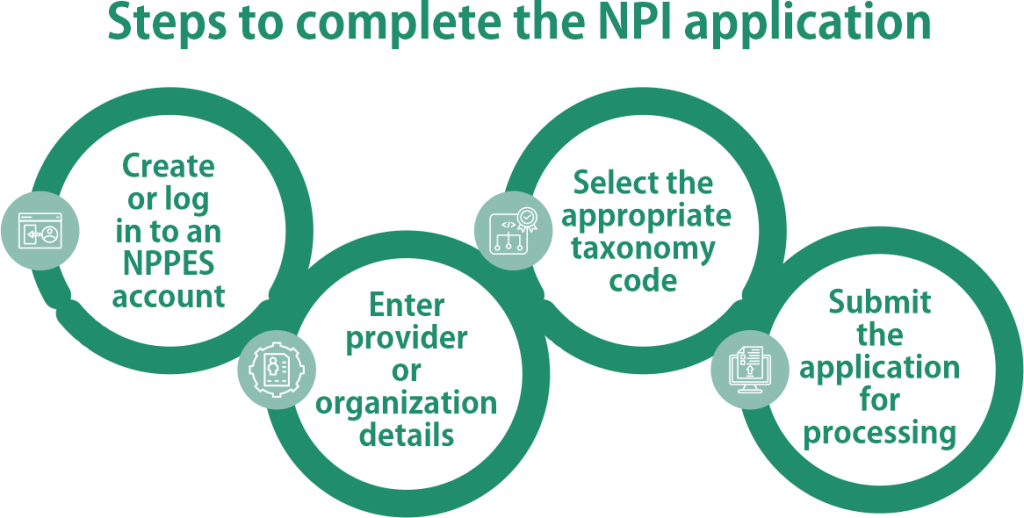
Steps to complete the NPI application
The application is submitted online through the NPPES portal. Providers must create an account, enter personal or organizational details, and select the correct taxonomy code. After submission, the system reviews the application and issues an NPI if the data is valid.
Key steps include:
1. Create or log in to an NPPES account
2. Enter provider or organization details
3. Select the appropriate taxonomy code
4. Submit the application for processing
Information required for the application
Applicants must provide basic identity and practice details during registration. This includes legal name, practice address, and provider type. Incorrect or incomplete data can delay approval or cause rework.
Required details typically include:
1. Legal name and contact information
2. Practice or organization address
3. Taxonomy classification
4. License information (if applicable)
Compliance requirements for maintaining NPI
To ensure correct billing, credentialing, and payer validation, NPI data must be kept up to date. Outdated records might cause claim rejections and enrollment complications.
When NPI information must be updated
Providers and organizations must update NPI information when they make any changes to their practice details. This includes address modifications, name revisions, and practice location changes. Failure to update information can lead to inconsistencies in payer systems.
Common update situations include:
- Change of practice address
- Change in legal name or ownership
- Addition or removal of practice locations
- Changes in provider classification or taxonomy
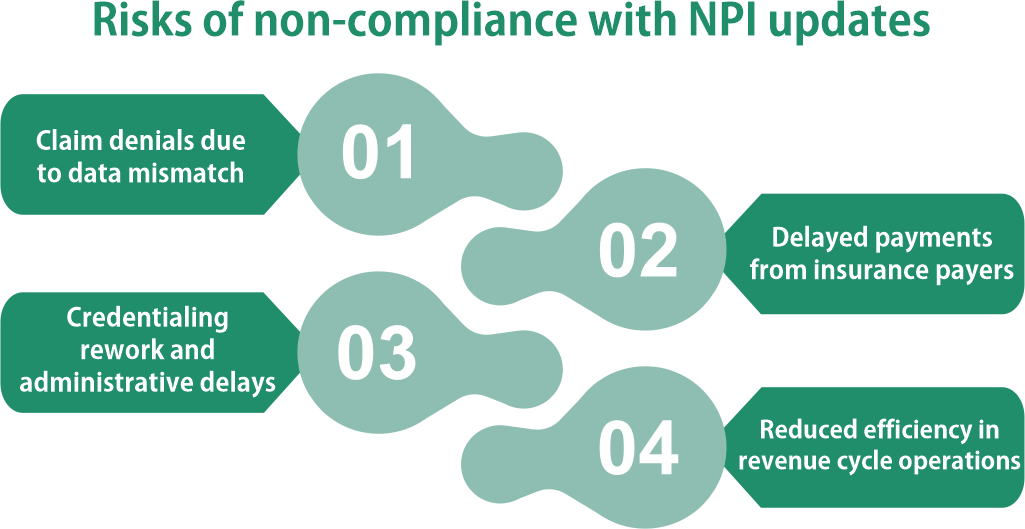
Risks of non-compliance with NPI updates
Incorrect or outdated NPI information can disrupt claim processing and credentialing. Payers may reject claims if provider details do not match enrollment records. This directly affects reimbursement timelines.
Key risks include:
- Claim denials due to data mismatch
- Delayed payments from insurance payers
- Credentialing rework and administrative delays
- Reduced efficiency in revenue cycle operations
Conclusion
NPI is a required identifier for billing, credentialing, and insurance enrollment across healthcare systems. It ensures accurate provider identification and reduces claim processing errors. Without it, healthcare workflows face delays in reimbursement and payer validation.
Understanding NPI requirements helps prevent claim rejections and supports smooth revenue cycle performance. Providers, administrators, and billing teams must ensure correct NPI usage and updates. This improves compliance, billing accuracy, and operational efficiency. If you need assistance with provider enrollment or credentialing, contact our experts for personalized guidance.
FAQs
What is the purpose of an NPI number in healthcare?
An NPI number is used to identify healthcare providers and organizations in billing, credentialing, and insurance transactions. It ensures accurate provider identification across all HIPAA-covered electronic healthcare systems.
Who is required to have an NPI number?
NPIs are required for doctors, nurse practitioners, physician assistants, dentists, therapists, and healthcare organizations. It must be provided by any provider or organization that submits claims or enrolls with insurance payers.
Can healthcare billing be done without an NPI number?
No. Most insurance payers require an NPI for claim submission. Without it, claims are often rejected or denied, leading to payment delays and billing disruptions.
What is the difference between Type 1 and Type 2 NPI?
Type 1, NPI is assigned to individual healthcare providers such as physicians and NPs. Type 2 NPI is assigned to organizations such as hospitals, clinics, and group practices.
How long does it take to get an NPI number?
In most cases, an NPI is issued within a few days after submitting a complete application through the NPPES system. Delays may occur if information is missing or incorrect.