
Choosing a doctor often involves more than checking their experience, specialty, or patient reviews. One important factor that many patients overlook is whether that physician has hospital privileges. These privileges determine the medical services a doctor is authorized to perform within a specific hospital and play a significant role in ensuring patient safety, quality care, and regulatory compliance.
Whether you’re a patient trying to make informed healthcare decisions or a physician navigating the credentialing process, understanding hospital privileges is essential. They are not automatically granted to every licensed doctor, nor are tWhy Are Hospital Privileges Importanthey the same as being affiliated with a hospital. Instead, they are earned through a rigorous evaluation of a physician’s education, training, clinical experience, and professional competence.
In this article, you’ll learn what hospital privileges are, why they matter, how doctors obtain them, the different types available, and answers to common questions that patients and healthcare professionals frequently ask.
What Are Hospital Privileges?
Hospital privileges are the specific authorizations granted by a hospital that allow a physician or other qualified healthcare provider to perform designated medical services within that facility. These privileges define the scope of care a doctor can provide, such as admitting patients, performing surgeries, conducting specialized procedures, or managing inpatient treatment.
Unlike a medical license, which allows a physician to practice medicine within a state, hospital privileges are granted by individual hospitals after a thorough review of the physician’s qualifications, training, experience, certifications, and demonstrated clinical competence. This means a doctor may have privileges at one hospital but not at another, even within the same city.
Hospitals evaluate physicians to ensure they can safely perform the procedures they request. For example, an orthopedic surgeon may receive privileges to perform joint replacement surgeries, while a cardiologist may be approved to conduct cardiac catheterizations. Each privilege is carefully matched to the physician’s expertise to protect patient safety and maintain high standards of care.
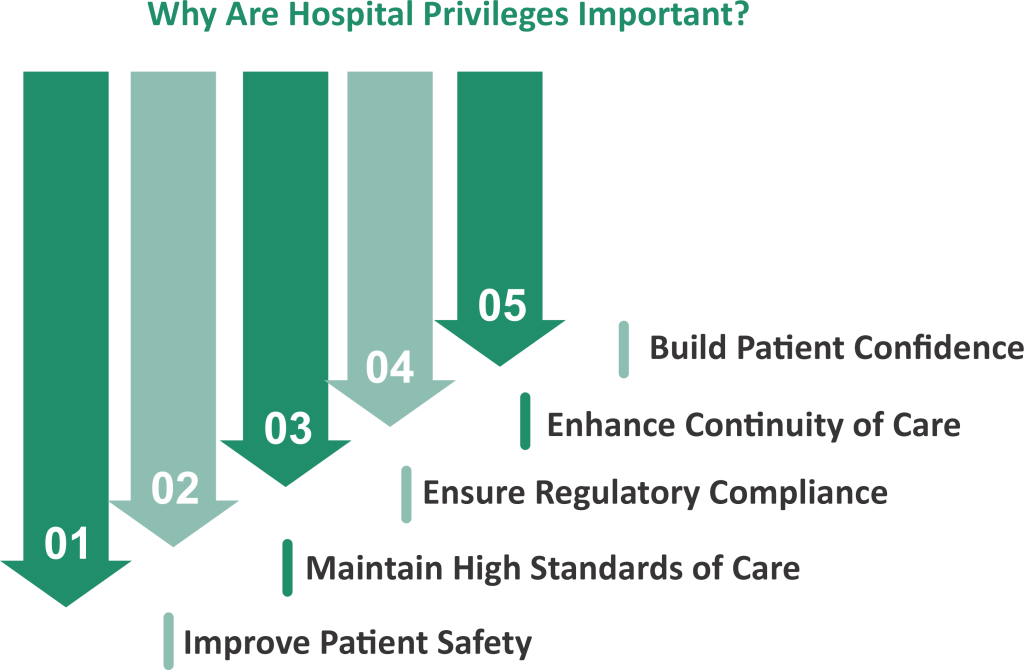
Why Are Hospital Privileges Important?
Hospital privileges are much more than an administrative requirement. They are a critical component of healthcare quality, patient safety, and regulatory compliance. By carefully evaluating physicians before granting privileges, hospitals create a safer environment where patients receive care from professionals who have demonstrated the necessary knowledge and skills.
Improve Patient Safety
Patient safety is the primary reason hospitals require physicians to obtain privileges. Before approval, hospitals verify a doctor’s education, residency training, board certifications, professional references, malpractice history, and clinical experience. This extensive review helps ensure that only qualified physicians perform specific treatments and procedures.
Maintain High Standards of Care
Hospital privileges support consistent healthcare quality by matching physicians with procedures they are trained to perform. Hospitals also conduct regular performance evaluations, peer reviews, and ongoing competency assessments to ensure doctors continue meeting clinical standards throughout their careers.
Ensure Regulatory Compliance
Accrediting organizations and government agencies expect hospitals to maintain a formal credentialing and privileging process. Proper oversight helps hospitals comply with healthcare regulations while reducing legal and financial risks associated with unqualified practice.
Enhance Continuity of Care
When physicians have hospital privileges, they can often continue treating their patients throughout hospitalization instead of transferring care to another provider. This continuity improves communication, strengthens patient trust, and often leads to better treatment outcomes.
Build Patient Confidence
Patients feel more confident knowing their physician has undergone a comprehensive review before receiving permission to practice within a hospital. Hospital privileges demonstrate that the physician has met established clinical and professional standards recognized by the institution.
How Doctors Obtain Hospital Privileges
Receiving hospital privileges involves a structured review process designed to confirm a physician’s qualifications and clinical competence. Although the exact requirements vary by hospital, the overall process follows several important steps.
Submit an Application
The physician begins by completing a detailed application that outlines their education, residency, fellowship training, work history, licenses, certifications, and requested clinical privileges.
Credential Verification
The hospital’s credentialing department verifies all submitted information, including:
- Medical school graduation
- Residency and fellowship completion
- Active state medical license
- Board certification status
- DEA registration, if applicable
- Professional references
- Malpractice claims history
- Disciplinary actions, if any
This verification ensures the physician’s credentials are accurate and current.
Clinical Competency Review
Hospitals evaluate whether the physician has sufficient experience to safely perform the requested procedures. The review may include surgical case logs, procedure volumes, peer recommendations, and outcome data to assess competency.
Medical Staff Committee Evaluation
The physician’s application is reviewed by department leaders and the hospital’s Medical Executive Committee. They determine whether the applicant meets the hospital’s standards and whether the requested privileges are appropriate for their specialty and experience.
Final Approval
After committee recommendations, the hospital’s governing board or board of directors makes the final decision to grant, deny, or limit the requested privileges.
Ongoing Monitoring and Renewal
Hospital privileges are not permanent. Physicians undergo periodic reappointment and continuous performance evaluations to ensure they continue meeting quality and safety standards. Hospitals may modify, renew, or revoke privileges based on clinical performance and professional conduct.
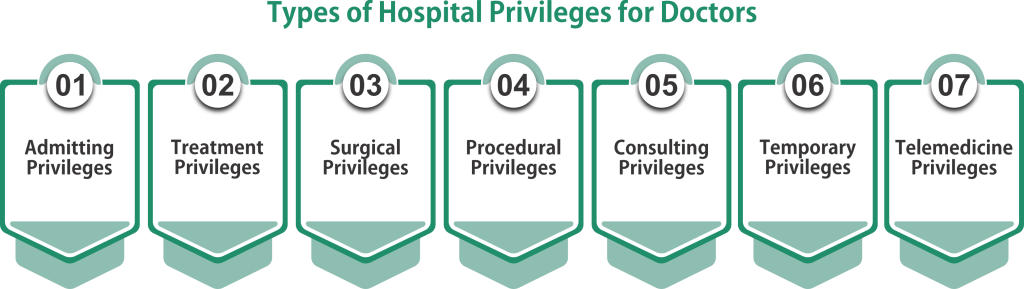
Types of Hospital Privileges for Doctors
Hospital privileges are tailored to a physician’s specialty, training, and clinical experience. Different privileges allow doctors to perform specific services while ensuring patient care remains safe and effective.
1. Admitting Privileges
Admitting privileges allow physicians to admit patients directly into the hospital and oversee their inpatient care. Primary care physicians and specialists often hold these privileges to provide seamless treatment for their patients.
2. Treatment Privileges
Treatment privileges authorize physicians to diagnose, evaluate, and manage hospitalized patients. These privileges define the scope of inpatient care a doctor can provide based on their expertise.
3. Surgical Privileges
Surgeons receive authorization to perform specific operations rather than unrestricted access to every surgical procedure. For example, a general surgeon may perform abdominal surgeries, while a neurosurgeon is approved for brain and spinal procedures.
4. Procedural Privileges
These privileges cover specialized diagnostic or therapeutic procedures such as:
- Endoscopy
- Colonoscopy
- Cardiac catheterization
- Bronchoscopy
- Ultrasound-guided procedures
- Pain management injections
Each procedure requires documented training and demonstrated competency.
5. Consulting Privileges
Consulting privileges allow physicians to evaluate hospitalized patients upon request from another treating physician. These doctors provide expert recommendations without assuming responsibility for the patient’s overall hospital care.
6. Temporary Privileges
Hospitals may grant temporary privileges to physicians in specific circumstances, including emergency staffing needs, locum tenens assignments, or when specialists are needed for a limited period while completing the full credentialing process.
7. Telemedicine Privileges
As virtual healthcare expands, many hospitals grant telemedicine privileges that enable qualified physicians to provide remote consultations, diagnostic support, and specialty services while complying with applicable regulations.
Hospital Privileges for Doctors
Hospital privileges play an essential role in a physician’s ability to deliver comprehensive patient care. Without appropriate privileges, doctors may be unable to admit patients, perform procedures, or continue treating individuals once they require hospitalization.
For physicians in private practice, hospital privileges allow them to maintain continuity of care by following their patients from the clinic into the hospital setting. Specialists rely on privileges to perform procedures and surgeries that require hospital facilities, advanced equipment, and multidisciplinary support teams.
Employed physicians often receive assistance from their healthcare organization during the credentialing and privileging process, while independent practitioners are typically responsible for completing applications and maintaining documentation themselves.
Because each hospital establishes its own privileging standards, many physicians apply for privileges at multiple hospitals. This flexibility allows them to expand patient access, collaborate with different healthcare teams, and continue serving patients across various healthcare systems.
Regardless of employment status or specialty, hospital privileges demonstrate that a physician has met the hospital’s clinical standards and is qualified to provide specific medical services within that institution.
Doctor Privileges at Hospital
Doctor privileges at a hospital differ depending on the physician’s specialty, experience, and approved scope of practice. Rather than granting unrestricted authority, hospitals authorize physicians to perform only the services they have proven they can safely deliver.
For example:
- Emergency physicians evaluate and stabilize patients with urgent or life-threatening conditions.
- Cardiologists may perform diagnostic heart procedures such as cardiac catheterizations if specifically approved.
- Orthopedic surgeons can conduct procedures like fracture repairs and joint replacement surgeries based on their granted surgical privileges.
- Obstetricians and gynecologists (OB/GYNs) may provide prenatal care, perform cesarean deliveries, and manage gynecological surgeries according to their approved privileges.
- Radiologists interpret medical imaging and may perform image-guided interventions if those procedures are included within their privileges.
- Hospitalists oversee the day-to-day medical care of hospitalized patients and coordinate treatment plans with specialists.
Hospitals continuously monitor physician performance through peer reviews, quality improvement programs, and ongoing competency assessments. If a doctor wishes to perform a new procedure or adopt advanced treatment techniques, they must typically demonstrate additional training and obtain approval before those privileges are expanded.
Difference Between Hospital Affiliation and Hospital Privileges
A hospital affiliation refers to a physician’s professional relationship with a hospital or healthcare system. This relationship may involve employment, academic appointments, referral networks, or participation in a healthcare organization. However, an affiliation alone does not authorize a doctor to admit patients or perform medical procedures within that hospital.
Hospital privileges, on the other hand, are formal clinical authorizations that allow physicians to provide specific medical services at a hospital. These privileges are granted only after the hospital verifies the physician’s education, training, experience, certifications, and clinical competence.
Here’s a quick comparison:
| Hospital Affiliation | Hospital Privileges |
| Indicates a professional relationship with a hospital | Grants permission to provide specific medical services |
| May involve employment or referral partnerships | Based on credentialing and competency review |
| Does not automatically allow patient care in the hospital | Allows approved clinical activities within the hospital |
| Can exist without clinical responsibilities | Requires approval from the hospital’s governing body |
| Focuses on organizational connection | Focuses on patient care responsibilities |
Do All Doctors Have Hospital Privileges?
The simple answer is no. Not every licensed physician has hospital privileges, and in many cases, they may not need them depending on their area of practice.
Hospital privileges are typically necessary for physicians who admit patients, perform surgeries, or provide inpatient care. However, many doctors work exclusively in settings where hospital access is unnecessary.
Examples of physicians who may not have hospital privileges include:
- Telemedicine physicians who provide virtual consultations only.
- Urgent care physicians who treat non-emergency conditions outside hospital settings.
- Occupational medicine physicians working with employers.
- Researchers focused on clinical studies rather than patient care.
- Physicians working in outpatient clinics or ambulatory care centers.
- Retired physicians with inactive clinical practice.
In addition, many primary care physicians no longer manage hospitalized patients directly. Instead, they coordinate with hospitalists, physicians who specialize in caring for patients during their hospital stay. This model allows patients to receive continuous inpatient care even if their regular doctor does not hold hospital privileges.
Do Doctors Pay for Hospital Privileges?
In many cases, yes, doctors may pay certain fees associated with obtaining and maintaining hospital privileges. However, the exact costs vary depending on the hospital’s policies, the physician’s employment status, and the services included in the credentialing process.
Common expenses may include:
- Initial application fees
- Credential verification costs
- Background check fees
- Peer review administration expenses
- Reappointment or renewal fees
- Continuing Medical Education (CME) requirements needed to maintain eligibility
Physicians in private practice are generally responsible for these expenses themselves, while hospitals or healthcare organizations often cover some or all of the costs for employed physicians.
Hospital Credentialing vs Hospital Privileges
Although closely related, credentialing and hospital privileges are two distinct parts of the physician approval process.
Credentialing is the process of verifying a physician’s qualifications. Hospitals review educational background, residency and fellowship training, state licenses, board certifications, malpractice history, work experience, and professional references to confirm the physician meets established standards.
Privileging occurs after credentialing is complete. During this stage, the hospital determines exactly which procedures, treatments, and clinical responsibilities the physician is authorized to perform based on their demonstrated competence.
The following table highlights the differences:
| Credentialing | Hospital Privileges |
| Verifies education, training, and qualifications | Grants permission to perform specific clinical services |
| Confirms physician identity and credentials | Defines the physician’s scope of practice within the hospital |
| Focuses on eligibility | Focuses on clinical competency |
| Occurs before privileges are granted | Occurs after credential verification |
| Includes ongoing monitoring and periodic recredentialing | Includes regular review and renewal of approved privileges |
What Happens If Hospital Privileges Are Suspended?
Hospital privileges may be suspended when there are concerns about a physician’s ability to provide safe and effective patient care. Suspension does not always indicate wrongdoing, but it does trigger a formal review process to protect patients and maintain clinical standards.
Reasons for suspension may include:
- Concerns about patient safety
- Repeated deviations from hospital policies
- Failure to maintain required licenses or certifications
- Professional misconduct
- Significant malpractice findings
- Failure to complete required documentation or renewal requirements
When concerns arise, hospitals typically initiate a peer review process. Depending on the circumstances, the physician may receive a temporary suspension while the investigation is conducted.
Possible outcomes include:
- Reinstatement of privileges after concerns are resolved.
- Additional training or supervision before privileges are restored.
- Modification or limitation of certain clinical privileges.
- Permanent revocation of privileges in serious cases.
Most hospitals also provide physicians with an opportunity to respond to findings or appeal decisions through established medical staff procedures.
Need Help with Physician Credentialing and Hospital Privileging?
Obtaining and maintaining hospital privileges can be a time-consuming process that requires accurate documentation, credential verification, compliance with regulatory standards, and ongoing renewals. Whether you’re an independent physician, medical group, or healthcare organization, partnering with an experienced credentialing team can simplify the process and reduce administrative burdens.
Looking for professional support? Explore our Physician Credentialing and Hospital Privileging Services to learn how we help healthcare providers navigate credentialing requirements, expedite applications, and maintain compliance so they can focus on delivering exceptional patient care.
Summary
Hospital privileges are a critical part of modern healthcare, ensuring that physicians are qualified to provide specific medical services within a hospital. They go far beyond a physician’s medical license by defining the scope of procedures and treatments a doctor is authorized to perform based on their education, training, experience, and demonstrated clinical competence.
Understanding the difference between hospital privileges and hospital affiliation, the various types of hospital privileges for doctors, and the credentialing process can help both patients and healthcare professionals make more informed decisions. While not every physician requires hospital privileges, those who provide inpatient care or perform specialized procedures must undergo a thorough review before receiving authorization.
For patients, verifying whether a physician has hospital privileges can offer greater confidence in the quality and continuity of care. For healthcare providers, maintaining these privileges supports professional credibility, expands treatment opportunities, and ensures compliance with hospital and regulatory standards.