
Are you confident that every provider in your network has credentials verified accurately and on time? Credentialing delays frequently occur when healthcare organizations cannot confirm provider credentials quickly or accurately. Licensing boards, educational institutions, and certification authorities must verify each qualification directly before a provider can join an insurance network or begin billing. This verification stage often slows credentialing timelines and delays reimbursement.
Primary Source Verification in Credentialing ensures healthcare organizations confirm credentials directly with the issuing source, not just copies or provider attestations. Updated 2025–2026 NCQA standards require most verifications to be completed within 120 days, down from 180 days. Certified credentialing verification organizations must complete verifications within 90 days, necessitating faster tracking and documentation review.
Credentialing now requires ongoing monitoring of licenses, sanctions, and exclusions at least every 30 days, improving accuracy and patient safety. These updates increase administrative work for credentialing specialists and revenue teams. The following sections outline how primary source verification works, required checks, common errors, and best practices.
Why Primary Source Verification in Credentialing Matters
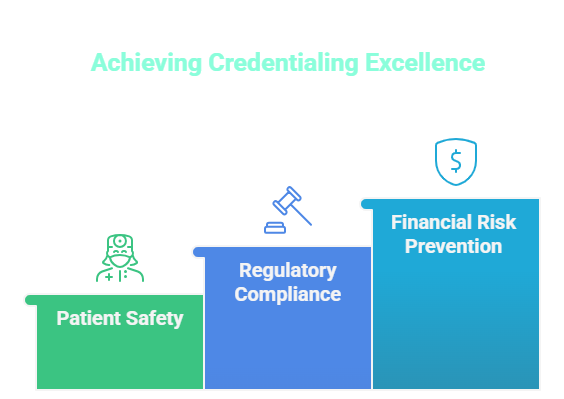
Primary Source Verification in Credentialing ensures that every provider’s qualifications are confirmed directly with the issuing organizations. Proper verification protects patients, maintains compliance, and reduces financial and operational risk for healthcare organizations.
Patient Safety and Provider Qualification
Direct verification of licenses, board certifications, and education ensures providers are qualified for the services they offer. Studies show that up to 15% of credential applications contain errors that can impact patient care if not caught. PSV prevents unqualified practitioners from providing care and ensures that healthcare teams meet the standards of clinical competence regulations.
Compliance With Regulatory Standards
Healthcare organizations must comply with NCQA, URAC, and state-specific credentialing regulations. PSV ensures adherence to these rules, including timelines, documentation, and verification procedures. In 2026, the requirement to continuously monitor licenses and sanctions every 30 days is increasingly enforced. Noncompliance can result in penalties, loss of network participation, or suspension of provider privileges.
Financial and Billing Risk Prevention
Failure to conduct PSV can lead to claim denials, delayed reimbursements, and potential fines. Verifying credentials directly with primary sources reduces administrative errors and prevents billing fraud. For example, insurance claims involving unverified providers have an estimated denial rate of 12–15%, increasing operational costs for hospitals and practices. Accurate verification safeguards both revenue and organizational reputation.
How Primary Source Verification Works in Healthcare
Primary Source Verification in Credentialing is the process of confirming provider credentials directly with the original issuing organization. Proper verification ensures compliance, prevents billing errors, and maintains patient safety.
Step-by-Step Verification Process
1. Collect Provider Information: Gather licenses, board certifications, education records, DEA registration, and work history.
2. Identify Primary Sources: Determine which institutions or authorities issued each credential. This includes medical schools, state licensing boards, and specialty boards.
3. Contact Primary Sources: Verification can be completed via secure databases, email, telephone, or official letters. Use designated equivalent sources (DES) only when primary sources are unavailable.
4. Document Verification: Record all confirmations accurately in credentialing files. Track expiration dates and renewal requirements.
5. Ongoing Monitoring: Regularly check license status, disciplinary actions, and sanctions. Monthly or quarterly updates help prevent compliance and billing risks.
Common Sources Used for Verification
- Educational Institutions: Medical schools, residencies, fellowships.
- State and Federal Licensing Boards: State medical boards, DEA, and nursing boards.
- Specialty Boards: Board certifications, professional associations.
- Employment Verification: Previous hospitals, clinics, and practices.
- National Databases: National Practitioner Data Bank (NPDB), disciplinary action registries.
- Designated Equivalent Sources (DES): AMA Physician Masterfile, ABMS, AOA Physician Database, ECFMG for international graduates.
PSV Requirements for Credentialing
Primary Source Verification in Credentialing is mandatory to ensure provider credentials are valid, accurate, and compliant with payor and regulatory standards.
Credentials That Require Primary Source Verification
Credentialing teams must verify all critical provider credentials directly with the issuing authority. Key credentials include:
Licenses: State medical licenses, nursing licenses, and DEA registrations.
Board Certifications: Specialty boards such as ABMS, AOA, and other professional associations.
Education: Medical school diplomas, residency, and fellowship completions.
Work History: Previous hospitals, clinics, or healthcare organizations where the provider practiced.
Professional Memberships: Associations that require certification or continuing education.
Organizations That Require PSV
Multiple organizations and regulatory bodies enforce PSV requirements to ensure healthcare quality and compliance. These include:
State Licensing Boards: Require up-to-date verification for licensure and renewals.
Payors and Insurance Companies: Require verified credentials for provider enrollment and claims processing.
Accreditation Bodies: NCQA, URAC, and The Joint Commission enforce PSV as part of compliance audits.
Federal Agencies: Medicare and Medicaid require primary source verification for provider participation.
Credentialing Verification Best Practices
Primary Source Verification in Credentialing ensures provider qualifications are accurate, verifiable, and compliant. Following structured best practices reduces errors, prevents compliance issues, and maintains smooth payer enrollment and billing operations.
- Maintain a Structured Verification Workflow
- A standardized workflow is critical for timely and accurate PSV. Key steps include:
- Develop a detailed checklist for each credential type.
- Assign verification duties to certain members of the workforce.
- Track verification status with centralized tools or software.
- Use automated reminders for license and certification expirations.
Maintain Accurate Credentialing Records
Accurate documentation supports compliance, audit readiness, and payer requirements. Practices should:
- Store all verified documents in secure, HIPAA-compliant digital systems.
- Maintain original verification dates, expiration dates, and source contacts.
- Ensure updates are logged promptly when credentials change.
- Conduct internal audits quarterly to confirm accuracy.
Conduct Periodic Recredentialing Reviews
Recredentialing ensures ongoing provider qualification and compliance. Best practices include:
- Schedule recredentialing reviews annually or as required by payers.
- Verify licenses, board certifications, work history, and sanctions.
- Use automated alerts for upcoming renewals or expirations.
- Document each review thoroughly for audit purposes.
Common PSV Errors in Credentialing
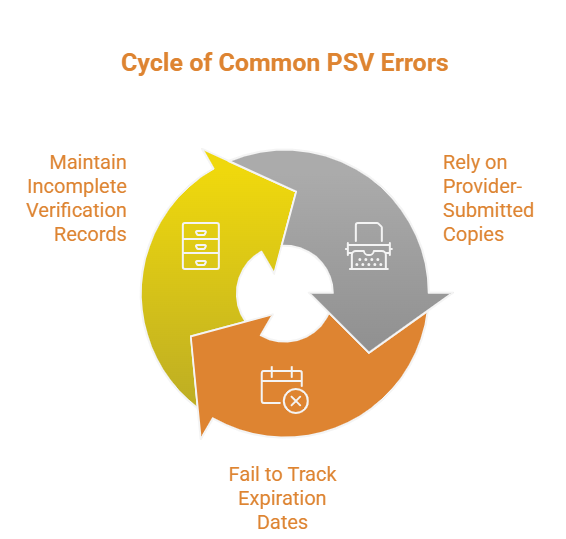
Primary Source Verification in Credentialing is essential for accurate provider records and compliance. Errors in PSV create delays, increase denial risks, and expose organizations to regulatory penalties. Understanding common mistakes helps credentialing teams prevent costly issues and maintain workflow efficiency.
Reliance on Provider-Submitted Copies
One common issue is relying on provider-submitted documentation rather than verifying credentials with the source. Risks include:
- Accepting expired licenses or certifications.
- Verifying incomplete or unofficial documents.
- Overlooking discrepancies between documents and primary sources.
Solution: Always verify directly with medical schools, licensing boards, specialty boards, or previous employers. In 2026, surveys show that 28% of credentialing errors stem from relying solely on submitted copies.
Failure to Track Expiration Dates
Credential expiration dates often go unchecked, leading to gaps in compliance and payer network participation. Common issues include:
- Missing license renewals.
- Overlooking board certifications or DEA registrations.
- Ignoring continuing education requirements.
Solution: Implement automated tracking systems with alerts for upcoming expirations. Practices using automated PSV alerts report a 35% reduction in late renewals.
Incomplete Verification Records
Incomplete or poorly documented verification increases audit risk and claim denials. Key problems include:
- Missing verification confirmation letters.
- Lack of updated contact information for primary sources.
- Failure to document follow-up communications.
Solution: Maintain secure, centralized, and complete digital records. Conduct quarterly internal audits to ensure every credential is fully verified and documented.
Payer Primary Source Verification Checklist
Primary Source Verification in Credentialing ensures accurate provider data for payer enrollment and network participation. A structured checklist reduces delays, minimizes denials, and keeps organizations compliant with regulatory and payer requirements.
Core Verification Checklist
Credentialing teams must confirm these core credentials directly with the source:
1. Medical Licenses: Validate current status with state licensing boards.
2. Board Certifications: Confirm with specialty boards and renewal dates.
3. Education Records: Verify degrees and graduation dates with medical schools.
4. Work History: Confirm employment dates and roles with previous employers.
5. DEA Registration: Verify registration and expiration with the federal DEA database.
6. Malpractice Coverage: Confirm limits, status, and claim history with insurance carriers.
Documentation Required for Payer Enrollment
Complete, verifiable documentation is essential for payer approval. Key documents include:
- Verification letters or confirmation emails from primary sources.
- Copies of current licenses, certifications, and DEA registrations.
- Signed attestation forms from the provider.
- Proof of malpractice insurance and claims history.
- Updated curriculum vitae (CV) and employment verification forms.
Conclusion
Primary Source Verification in Credentialing is essential for confirming provider qualifications, ensuring regulatory compliance, and safeguarding patient safety. Accurate PSV prevents billing errors, claim denials, and administrative delays.
Healthcare organizations that implement structured verification workflows, maintain complete records, and conduct regular re-credentialing minimize risk and maintain smooth payer enrollment. Following these practices strengthens operational efficiency and protects both revenue and reputation.
FAQs
What is primary source verification in credentialing?
Primary Source Verification in Credentialing confirms provider credentials directly with the issuing organization to ensure accuracy and compliance.
Why is PSV important for healthcare organizations?
PSV reduces patient safety risks, prevents billing errors, and ensures compliance with NCQA, URAC, and state regulations.
Which credentials require primary source verification?
Licenses, board certifications, education, work history, and professional memberships must be verified directly with the source.
What are common errors in primary source verification?
Errors include relying on provider-submitted copies, missing expiration dates, and incomplete verification records.
How can organizations streamline PSV processes?
Use structured workflows, centralized digital records, automated alerts, and periodic recredentialing to maintain accuracy and compliance.