Are delayed payer approvals, claim denials, or provider onboarding issues affecting your practice? Weak credentialing management can delay reimbursement, interrupt patient care, and increase administrative work. Accurate provider records are essential for maintaining payer participation and regulatory compliance.
Credentialing management helps verify provider qualifications, maintain current enrollment records, and support compliance with Medicare, Medicaid, and commercial payers. According to CMS, the FY 2025 Medicare Fee-for-Service improper payment rate was 6.55% ($28.83 billion), highlighting the importance of accurate documentation and billing practices across healthcare organizations.
This guide explains what credentialing management is, how the process works, required documentation, compliance requirements, common challenges, and best practices.
What Is Credentialing Management?
Credentialing management is the ongoing process of collecting, verifying, tracking, renewing, and maintaining a healthcare provider’s professional credentials to meet payer, regulatory, and accreditation requirements. It includes verifying licenses, education, board certifications, work history, malpractice coverage, DEA registration, National Provider Identifier (NPI), and other qualifications through primary sources before providers deliver care or bill insurers.
Healthcare organizations use credentialing management to maintain accurate provider records, monitor credential expiration dates, and support compliance with Medicare, Medicaid, commercial payers, and accreditation standards. According to the Council for Affordable Quality Healthcare (CAQH), its Provider Data Portal contains more than 4.8 million provider profiles, helping health plans and healthcare organizations exchange credentialing information more efficiently.
Why Credentialing Management Matters
Credentialing management supports patient safety, regulatory compliance, and timely reimbursement. Incomplete or outdated provider records can delay payer enrollment, interrupt participation in insurance networks, and contribute to claim payment delays.
An organized credentialing process helps healthcare organizations:
- Verify provider qualifications through primary source verification.
- Maintain current licenses, certifications, and registrations.
- Reduce delays in payer enrollment and provider onboarding.
- Support compliance with CMS, NCQA, and commercial payer requirements.
- Prepare for audits and recredentialing reviews.
- Improve coordination between credentialing and revenue cycle teams.
Credentialing vs Provider Enrollment vs Privileging
Although these terms are often used together, they represent different administrative functions.
| Process | Primary Purpose | Outcome |
| Credentialing Management | Verifies and maintains provider qualifications throughout employment. | Confirms provider eligibility and ongoing compliance. |
| Provider Enrollment | Registers providers with Medicare, Medicaid, and commercial insurance plans. | Allows providers to bill and receive reimbursement from payers. |
| Clinical Privileging | Determines which clinical services a provider is authorized to perform within a healthcare facility | Grants procedure-specific or specialty-specific practice privileges. |
How Credentialing Management Works
Credentialing management follows a structured process that verifies provider qualifications, supports payer enrollment, and maintains compliance over time. Each step helps healthcare organizations reduce delays, maintain accurate records, and prepare providers to deliver care and submit claims.
Step 1: Provider Application and Document Collection
The process begins by collecting documents that confirm a provider’s identity, education, training, and professional qualifications. Common documents include:
1. State medical license
2. National Provider Identifier (NPI)
3. DEA registration (if applicable)
4. Board certifications
5. Professional résumé or CV
6. Malpractice insurance certificate
7. Work history and professional references
Step 2: Primary Source Verification (PSV)
Credentialing specialists verify submitted information directly with the issuing organizations. This includes licensing boards, educational institutions, specialty certification boards, and other official sources.
Primary Source Verification helps identify incomplete, expired, or inaccurate records before payer enrollment begins.
Step 3: Payer Enrollment and Credential Review
After verification, enrollment applications are submitted to Medicare, Medicaid, and commercial insurance plans.
Health plans review the provider’s qualifications before approving participation in their networks. Delays at this stage can postpone reimbursement and patient access.
Step 4: Ongoing Monitoring and Recredentialing
Credentialing management continues after enrollment. Healthcare organizations monitor license renewals, certifications, malpractice coverage, and payer requirements to keep provider records current.
Regular recredentialing and document reviews help maintain compliance, reduce billing interruptions, and support continued participation in insurance networks.
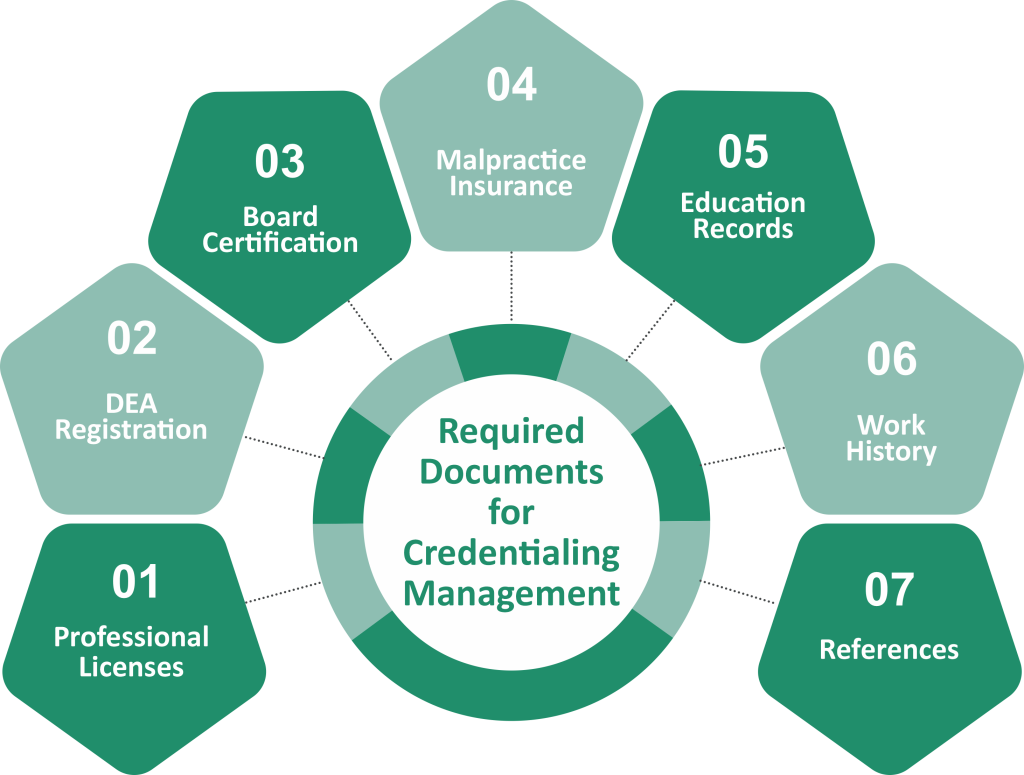
Required Documents for Credentialing Management
Complete and accurate documentation is the foundation of credentialing management. Missing or outdated records can delay provider enrollment, payer approval, and reimbursement, making document maintenance an ongoing responsibility.
Professional Licenses
A valid state professional license confirms that a healthcare provider is legally authorized to practice. Credentialing teams verify the license directly with the appropriate state licensing board and monitor expiration dates to maintain compliance.
DEA Registration
Providers who prescribe controlled substances must hold an active Drug Enforcement Administration (DEA) registration. Credentialing specialists verify the DEA number, registration status, and expiration date before completing payer enrollment when applicable.
NPI
The National Provider Identifier (NPI) is a unique 10-digit identifier assigned through the National Plan and Provider Enumeration System (NPPES). Medicare, Medicaid, and commercial insurers use the NPI to identify providers during enrollment, claims processing, and reimbursement.
Board Certification
Board certification confirms a provider has completed specialty-specific education, training, and examinations. While not required for every specialty or payer, many hospitals and insurance plans use board certification as part of their credentialing review.
Malpractice Insurance
Current malpractice insurance demonstrates that the provider carries professional liability coverage. Credentialing organizations review coverage limits, policy dates, and any claims history when required by payers or healthcare facilities.
Education Records
Education records verify medical school, residency, fellowship, and other professional training. These credentials are confirmed through primary source verification to ensure the provider meets licensing and payer requirements.
Work History
A complete work history helps credentialing teams review a provider’s clinical experience and identify unexplained employment gaps. Most payers request several years of employment history during the credentialing process.
References
Professional references provide independent confirmation of a provider’s clinical competence, ethics, and professional conduct. Hospitals and many commercial insurers require peer references from physicians or other qualified healthcare professionals familiar with the provider’s work.
Healthcare Credentialing Management Process
Healthcare credentialing management follows a structured sequence that verifies provider qualifications, supports payer enrollment, and maintains regulatory compliance. Each stage helps reduce approval delays, improve record accuracy, and support uninterrupted reimbursement.
1. Initial Credentialing
The process begins by collecting the provider’s required documents, including professional licenses, education records, board certifications, DEA registration, NPI, malpractice insurance, and work history.
Credentialing specialists review these records for completeness before verification begins.
2. Primary Source Verification (PSV)
Each credential is verified directly with the issuing organization, such as state licensing boards, educational centres, specialty certification boards, and the DEA.
Primary Source Verification confirms that provider information is valid, updated, and free of discrepancies.
3. Provider Enrollment
After verification, enrollment applications are submitted to Medicare, Medicaid, and commercial insurance plans.
Payers review the provider’s qualifications before approving participation in their networks and authorizing reimbursement for covered services.
4. Credentialing Committee Review
Many hospitals and healthcare organizations require a credentialing committee to evaluate the provider’s qualifications, clinical experience, and supporting documentation.
The committee recommends approval, additional review, or denial based on established policies.
5. Ongoing Credential Monitoring
Credentialing management continues after approval. Organizations monitor license renewals, DEA registrations, malpractice insurance, board certifications, and other credentials to prevent expiration and maintain compliance with payer and accreditation requirements.
6. Recredentialing
Most health plans and healthcare organizations require providers to complete recredentialing at regular intervals, commonly every two to three years.
Credentialing Management Experts
Credentialing management experts help healthcare organizations maintain accurate provider records, meet payer requirements, and support continuous compliance. Their knowledge of credential verification, provider enrollment, and regulatory standards helps reduce administrative delays and billing interruptions.
Who Are Credentialing Management Experts?
Credentialing management experts are professionals responsible for verifying provider qualifications, maintaining credential records, and coordinating enrollment with Medicare, Medicaid, and commercial insurance plans.
They work closely with providers, practice managers, billing teams, and compliance departments to keep credentialing activities current.
Key Responsibilities of Credentialing Management Experts
These professionals oversee the credentialing process from document collection through ongoing monitoring. Their responsibilities commonly include:
1. Collecting and reviewing provider documentation.
2. Performing Primary Source Verification (PSV).
3. Managing Medicare, Medicaid, and commercial payer enrollment.
4. Maintaining CAQH, NPPES, and PECOS records.
5. Monitoring license and certification expiration dates.
6. Coordinating recredentialing and provider updates.
7. Preparing documentation for audits and compliance reviews.
Skills Required for Effective Credentialing Management
Credentialing management experts require technical knowledge and strong organizational skills to maintain accurate provider information. Important competencies include:
- Knowledge of CMS, NCQA, and payer credentialing requirements.
- Understanding of provider enrollment regulations.
- Experience with credentialing software and document management systems.
- Familiarity with CPT, HCPCS, and ICD coding workflows that affect reimbursement.
- Attention to documentation accuracy and regulatory compliance.
- Effective communication with providers, payers, and healthcare organizations.
How Credentialing Management Experts Support Healthcare Organizations
Experienced credentialing professionals help organizations maintain provider eligibility, reduce enrollment delays, and improve operational efficiency. Their work supports timely reimbursement, audit readiness, accurate provider data, and continued participation in payer networks while helping healthcare organizations maintain compliance with changing regulatory requirements.
This process confirms that qualifications remain current and that providers continue to meet clinical, legal, and payer standards.
Credentialing Management Services
Credentialing management services help healthcare organizations maintain accurate provider credentials, support payer enrollment, and meet regulatory requirements. These services reduce administrative delays, improve record accuracy, and keep providers eligible to participate in insurance networks.
What Are Credentialing Management Services?
Credentialing management services cover the ongoing administration of provider credentials from initial document collection through recredentialing.
They include credential verification, provider enrollment, credential monitoring, compliance tracking, and record maintenance for physicians and other healthcare professionals.
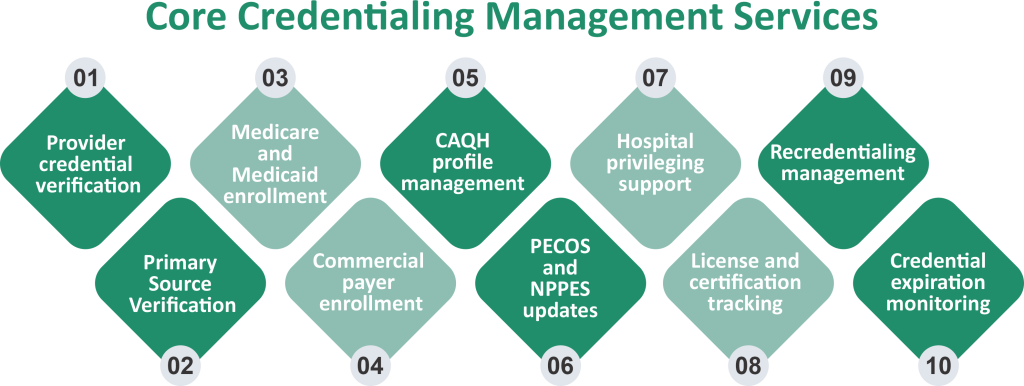
Core Credentialing Management Services
Healthcare organizations commonly rely on the following services:
- Provider credential verification
- Primary Source Verification (PSV)
- Medicare and Medicaid enrollment
- Commercial payer enrollment
- CAQH profile management
- PECOS and NPPES updates
- Hospital privileging support
- License and certification tracking
- Recredentialing management
- Credential expiration monitoring
Benefits of Credentialing Management Services
A structured credentialing program helps organizations maintain compliance and reduce administrative errors. Key benefits include:
- Faster provider onboarding
- Less enrollment delays
- Improved documentation accuracy
- Better compliance with CMS and payer requirements
- Reduced claim payment interruptions
- Timely credential renewals
- Improved coordination between credentialing and revenue cycle teams
Who Can Benefit from Credentialing Management Services?
Credentialing management services are valuable for many healthcare organizations, including:
1. Physician practices
2. Multi-specialty medical groups
3. Hospitals and health systems
4. Ambulatory surgery centers (ASCs)
5. Behavioral health practices
6. Dental clinics
7. Physical and occupational therapy clinics
8. Home health agencies
9. Telehealth providers
10. Medical billing and revenue cycle management companies
Conclusion
Credentialing management is a continuous process that helps healthcare organizations maintain provider qualifications, meet regulatory requirements, and support timely payer enrollment. Accurate credential records reduce administrative delays, strengthen compliance, and help providers remain eligible to deliver care and bill insurance plans.
By following a structured credentialing process and maintaining current documentation, healthcare providers and practice leaders can improve operational efficiency and reduce reimbursement risks. Regular monitoring and recredentialing also help organizations stay prepared for audits, payer updates, and changing regulatory requirements.
FAQs
What is credentialing management in healthcare?
Credentialing management is the ongoing process of verifying, tracking, and maintaining a healthcare provider’s licenses, certifications, education, and other credentials to meet payer and regulatory requirements.
Why is credentialing management important?
Credentialing management helps healthcare organizations maintain compliance, reduce enrollment delays, support timely reimbursement, and ensure providers remain qualified to participate in insurance networks.
What documents are required for credentialing management?
Common documents include professional licenses, DEA registration (if applicable), National Provider Identifier (NPI), board certifications, malpractice insurance, education records, work history, and professional references.
How often do healthcare providers need to complete recredentialing?
Most Medicare, Medicaid, commercial payers, and healthcare organizations require providers to complete recredentialing every two to three years, although requirements may vary by payer or accrediting body.
What is the difference between credentialing management and provider enrollment?
Credentialing management verifies and maintains a provider’s qualifications and compliance, while provider enrollment registers the provider with Medicare, Medicaid, and commercial insurance plans so they can bill and receive reimbursement.