Why are CAQH credentialing delays still occurring in 2026, even though most healthcare companies employ digital enrollment systems? The answer is usually not system failure, but rather minor administrative and information accuracy issues. CAQH-related challenges continue to affect provider enrollment and delay payer utilization in healthcare settings.
Based on market credentialing statistics, CAQH profile concerns such as incomplete provider information, missed attestation cycles, and mismatched records among payer systems keep causing enrollment delays in 2026. According to credentialing process reports, even minor errors can take 2 to 4 weeks per payer, especially when re-verification is necessary. The CAQH 120-day attestation criteria is a common issue for accounts due to inactivity if not maintained correctly.
This blog explains the Top 5 CAQH Credentialing Issues and How to Prevent Them using a structured, operational approach. It focuses on real-world breakdowns seen in credentialing, billing, and compliance workflows.
Overview of CAQH Credentialing System and Its Role in Enrollment
CAQH is a standardized provider data collection used by a majority of commercial payers in the United States. It saves provider demographics, licensure, education, job history, and insurance information needed for credentialing and enrollment options. In 2026, most payers still use CAQH ProView as their primary verification source before allowing network membership.
This section explains how CAQH data is processed and why small errors create major delays in credentialing cycles.
How Payers Use CAQH Data
Payers use CAQH data as a primary reference point during provider credentialing. The system works as a verification layer before contract approval and network access.
Key uses include:
- Verifying provider identity and demographics
- Confirming license status with state boards
- Checking malpractice insurance coverage
- Validating education and training history
- Matching NPI and taxonomy details across systems
Why Small Errors Create Enrollment Delays
Small CAQH errors create delays because credentialing systems depend on exact data matching. Even a single mismatch can stop automated approval checks and trigger manual verification.
Common delay triggers include:
- Outdated practices across payer systems
- Expired or missing license renewals
- Incorrect taxonomy or specialty codes
- Missed 120-day attestation updates
- Incomplete work history entries
Top 5 CAQH Credentialing Issues And How To Prevent Them: Profile Inaccuracy and Missing Data
Profile errors are a common cause of credentialing delays in CAQH systems. Missing or incorrect provider details can result in rejections, rework, and longer enrollment cycles across payers. In 2026, payer systems will continue to depend on precise information consistency between CAQH records and enrollment applications.
This section focuses on how incomplete or incorrect provider data affects credentialing outcomes and what areas require strict monitoring.
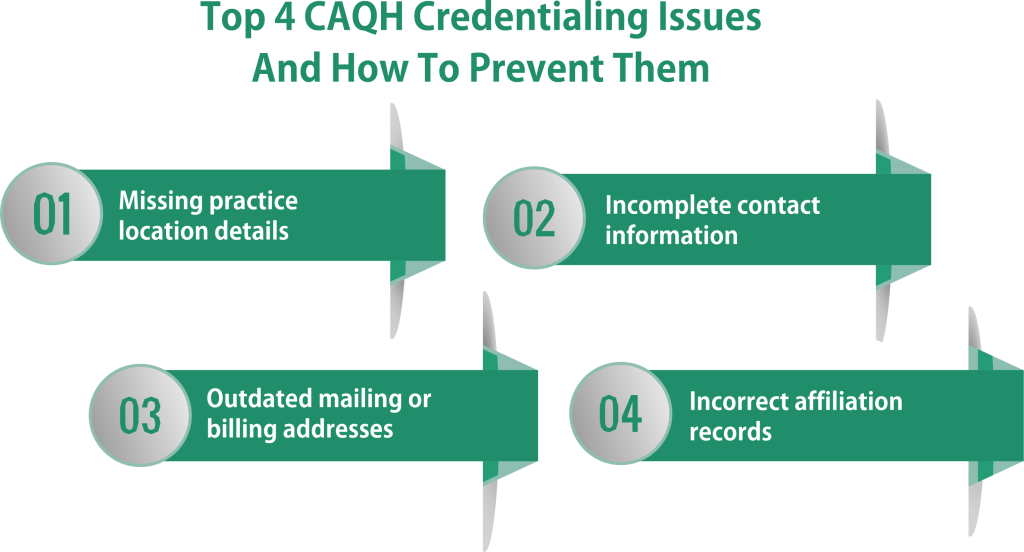
Incomplete Provider Demographics
Incomplete provider demographics are a primary source of credentialing delays. Even small gaps in basic data can stop application processing.
Common issues include:
- Missing practice location details
- Incomplete contact information
- Outdated mailing or billing addresses
- Incorrect affiliation records
Incorrect License and NPI Information
Incorrect license and NPI data create direct mismatches between CAQH records and payer databases. This is one of the most critical validation failures in credentialing workflows.
Common errors include:
- Expired state medical licenses
- Incorrect NPI numbers or taxonomy codes
- Mismatch between specialty and payer records
- Failure to update renewed licenses
Prevention Steps
Preventing profile inaccuracies requires structured data control and regular validation.
Key prevention steps include:
1. Monthly review of CAQH profile data
2. Cross-checking license status with state boards
3. Aligning NPI and taxonomy data across all systems
4. Updating practice locations immediately after changes
Common CAQH mistakes
Common CAQH errors directly impact provider enrollment and payer approval in 2026. Most of these problems are avoidable, but they persist due to poor data control, delayed updates, and a lack of responsibility in credentialing operations.
This section focuses on the most common CAQH issues that occur in daily credentialing processes and how they affect enrollment delays.
Incomplete Work History and Gaps
An incomplete work history is a common CAQH issue that leads to verification delays. Payers require continuous and accurate employment records without unexplained gaps.
Missing dates, unclear transitions, or incomplete employer details often trigger follow-up requests. This slows down credentialing review and extends approval timelines.
In many cases, delays occur because providers do not update work history after job changes. This creates inconsistencies between CAQH and payer applications.
Missing or Incorrect Supporting Documents
Supporting document errors are another frequent issue in CAQH submissions. These include expired licenses, outdated malpractice insurance, and missing certifications.
When documents are not updated, payers cannot complete verification checks. This results in application holds or rejection notices.
Delays often occur when renewals are completed but not updated in CAQH immediately. This creates a gap between actual status and system records.
Prevention Steps
Preventing common CAQH mistakes requires continuous monitoring and structured data updates across all provider records.
Key prevention actions include:
1. Updating work history after every role change
2. Uploading renewed documents without delay
3. Performing monthly profile audits
4. Assigning credentialing responsibility within the team
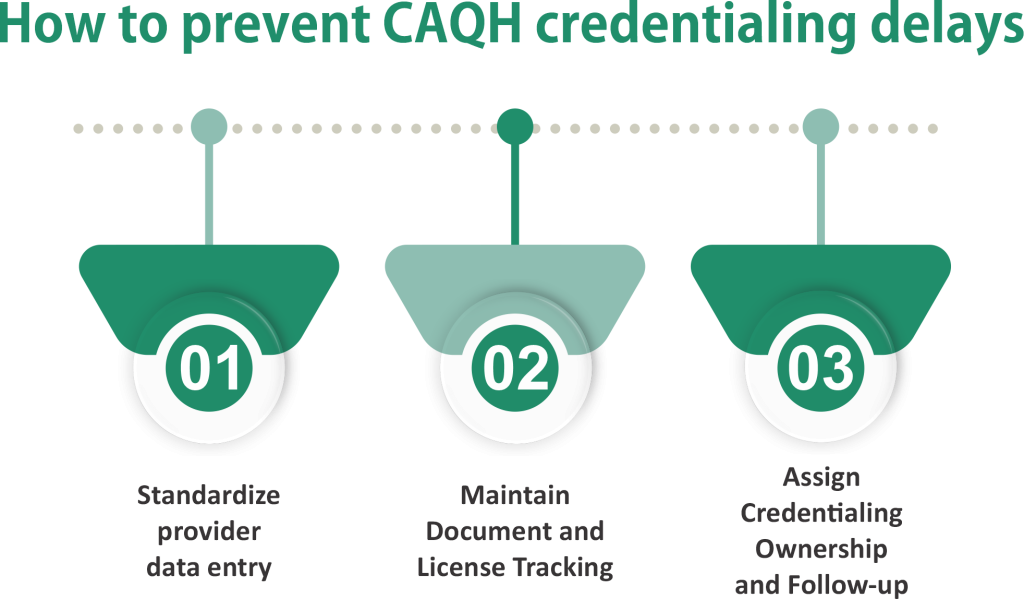
How to prevent CAQH credentialing delays
CAQH credentialing delays continue to impact provider enrollment timelines and reimbursement cycles in 2026. Preventable data, documentation, and monitoring gaps at the provider level cause the majority of delays rather than payer systems.
This section explains practical control measures used in healthcare operations to reduce CAQH-related delays and improve submission accuracy.
Standardize provider data entry.
Standardized data entry reduces inconsistencies between CAQH profiles and payer applications. Many delays occur when different team members enter data in different formats or versions.
Common problems include inconsistent address formats, mismatched NPI details, and incorrect taxonomy entries. These small differences trigger verification flags in payer systems.
Before submission, a uniform data entry procedure ensures that all provider information is consistent across systems.
Maintain Document and License Tracking
License and document tracking is critical for avoiding credentialing interruptions. Expired documents are one of the most common reasons for application delays.
This includes malpractice insurance, state licenses, and board certifications that must remain current at all times. Missing updates lead to verification holds and rework.
A tracking system helps ensure that renewals are updated in CAQH immediately after issuance.
Assign Credentialing Ownership and Follow-up
Lack of ownership is a major cause of delayed CAQH updates and missed deadlines. When responsibilities are unclear, updates and follow-ups are often delayed or ignored.
Credentialing tasks should be assigned to specific team members with clear accountability for updates and attestation cycles. This reduces missed updates and improves response time.
Consistent follow-up ensures CAQH profiles remain active and aligned with payer requirements.
Conclusion
CAQH credentialing delays in 2026 are still driven by preventable issues, such as incomplete profiles, missed attestations, documentation gaps, and data mismatches in payer systems. A structured credentialing process helps healthcare organizations reduce enrollment interruptions, improve compliance, and maintain steady reimbursement cycles.
Regular profile audits, timely document updates, standardized data entry, and clear credentialing ownership are essential for preventing delays. When these controls are consistently maintained, providers and billing teams can improve payer approval speed and keep CAQH profiles active and accurate.
FAQs
What are the most common CAQH credentialing issues?
The most common CAQH credentialing issues include incomplete provider profiles, incorrect NPI information, missing documents, work history gaps, and missed attestation deadlines. These errors often lead to enrollment delays and payer verification problems.
How often must providers update their CAQH profile?
Providers must attest and confirm the accuracy of their CAQH profile every 120 days. Regular updates are also required whenever there are changes to licenses, practice locations, insurance coverage, or professional affiliations.
How do CAQH profile errors affect payer enrollment?
CAQH profile errors can trigger manual reviews, additional verification requests, or application rejections. This may extend credentialing timelines and delay participation in payer networks.
What documents should be kept current in a CAQH profile?
Providers should maintain current medical licenses, malpractice insurance certificates, board certifications, DEA registrations, and other required credentialing documents. Expired records can delay payer approval.
How can healthcare organizations prevent CAQH credentialing delays?
Healthcare organizations can reduce delays by performing regular profile audits, tracking document expiration dates, standardizing provider data entry, and assigning responsibility for credentialing updates and follow-ups.